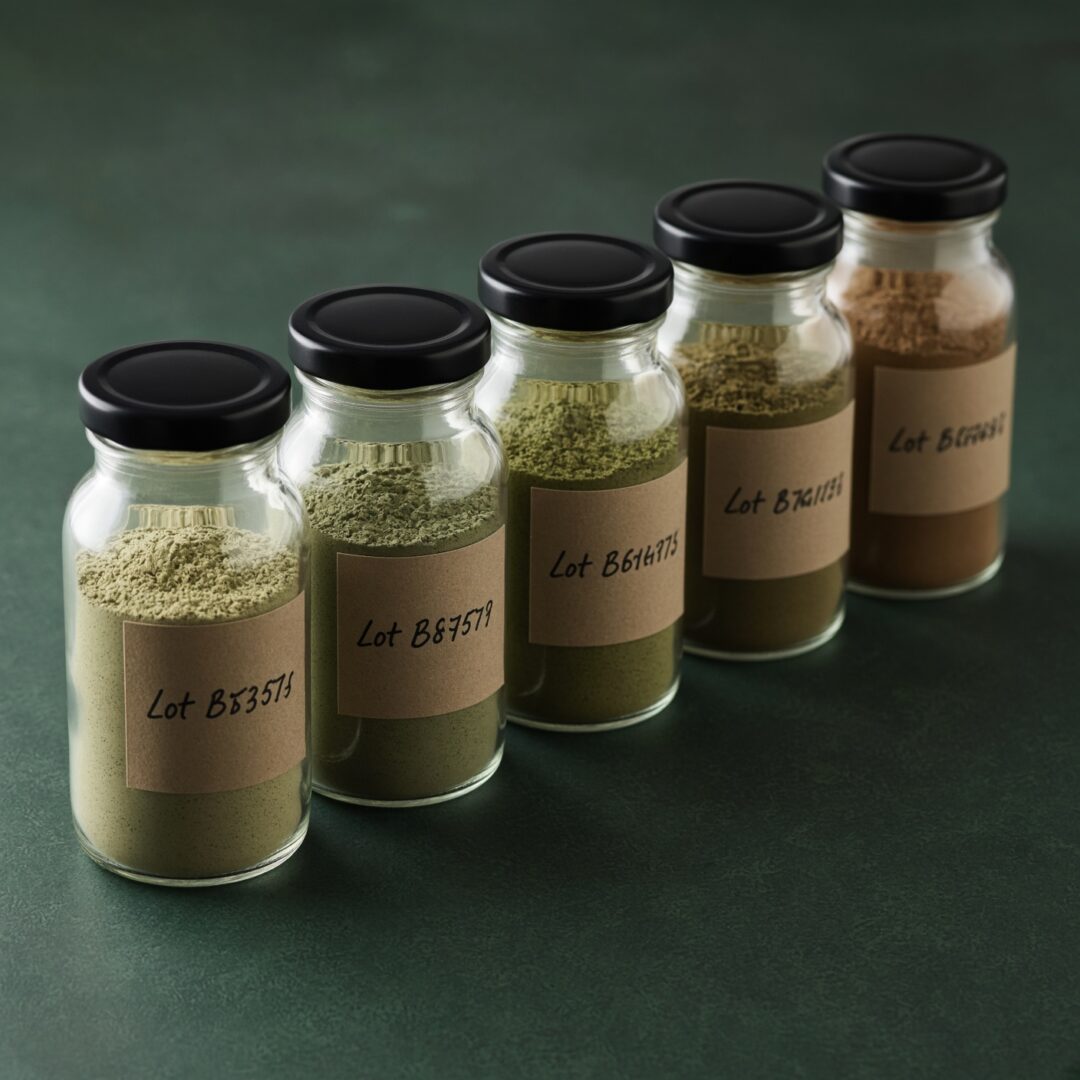

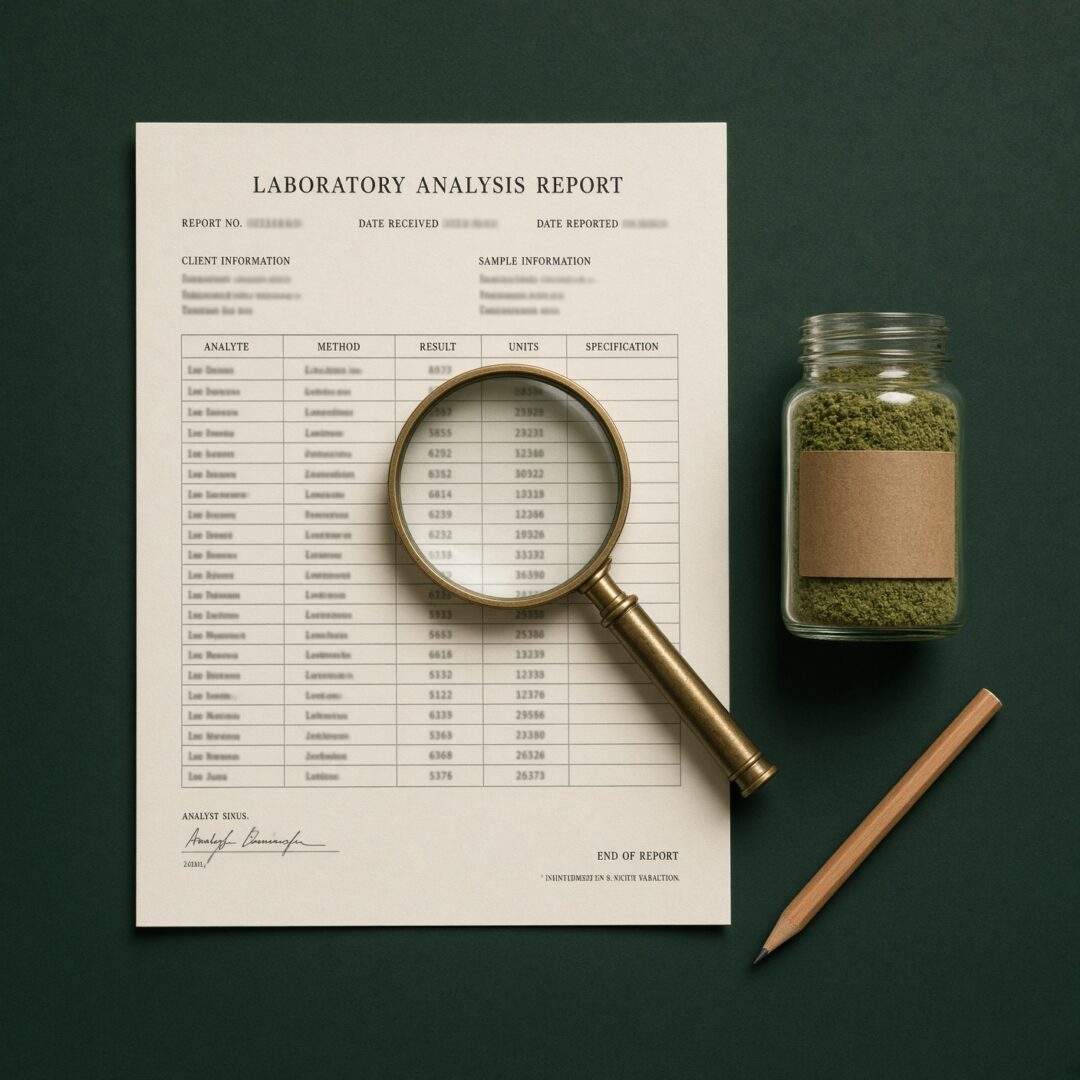
Every bag we sell carries a batch number that matches a certificate of analysis, and a QR code that takes you straight to it. But a COA is only useful if you can read it. This is a line-by-line walk through what each section of a kratom COA means and what to look for.
This article is educational information about lab documentation. It is not advice about using any product, and kratom is not intended to diagnose, treat, cure, or prevent any condition.
The header: who tested what, and when
The top of a COA identifies the laboratory, the client, the sample, and the dates. Three things matter here. The lab should be an independent third party, not the vendor itself. The sample identifier should match the batch or lot number printed on your bag; a COA that cannot be matched to your specific bag tells you nothing about it. And the test date tells you how current the result is.
The alkaloid panel
This section reports the naturally occurring compounds in the leaf, usually as percentages by weight. Mitragynine, the primary alkaloid, typically tests between roughly one and two percent in natural leaf, with the exact figure varying by harvest and vein type. 7-hydroxymitragynine appears at trace levels in natural leaf, a small fraction of one percent. Numbers far outside these natural ranges suggest a product that is not plain dried leaf.
Heavy metals
Plants draw minerals from soil, so botanical products are tested for lead, arsenic, cadmium, and mercury, usually reported in parts per million or parts per billion. You will often see entries like ND, meaning not detected, or a less-than sign followed by a number, meaning any amount present is below the smallest quantity the instrument can reliably measure. Reference limits from bodies such as the United States Pharmacopeia give context for the numbers reported.
Microbiology
The microbial panel screens for total aerobic bacteria, yeast and mold, coliforms, and specific pathogens including salmonella and E. coli. For the pathogens, the desired result is absent or negative. The counts for general categories are reported in colony-forming units per gram against standard limits. This panel exists because kratom is an agricultural product, and it is the section that protects you from the kind of contamination that caused the industry’s 2018 salmonella outbreak.
Checking your own bag
Find the lot number on your bag, scan the QR code or open our COA dashboard, and match the batch. Every strain we stock shows its current batch results, including the full lab documents. If anything on a COA is unclear, contact us and we will walk you through it.