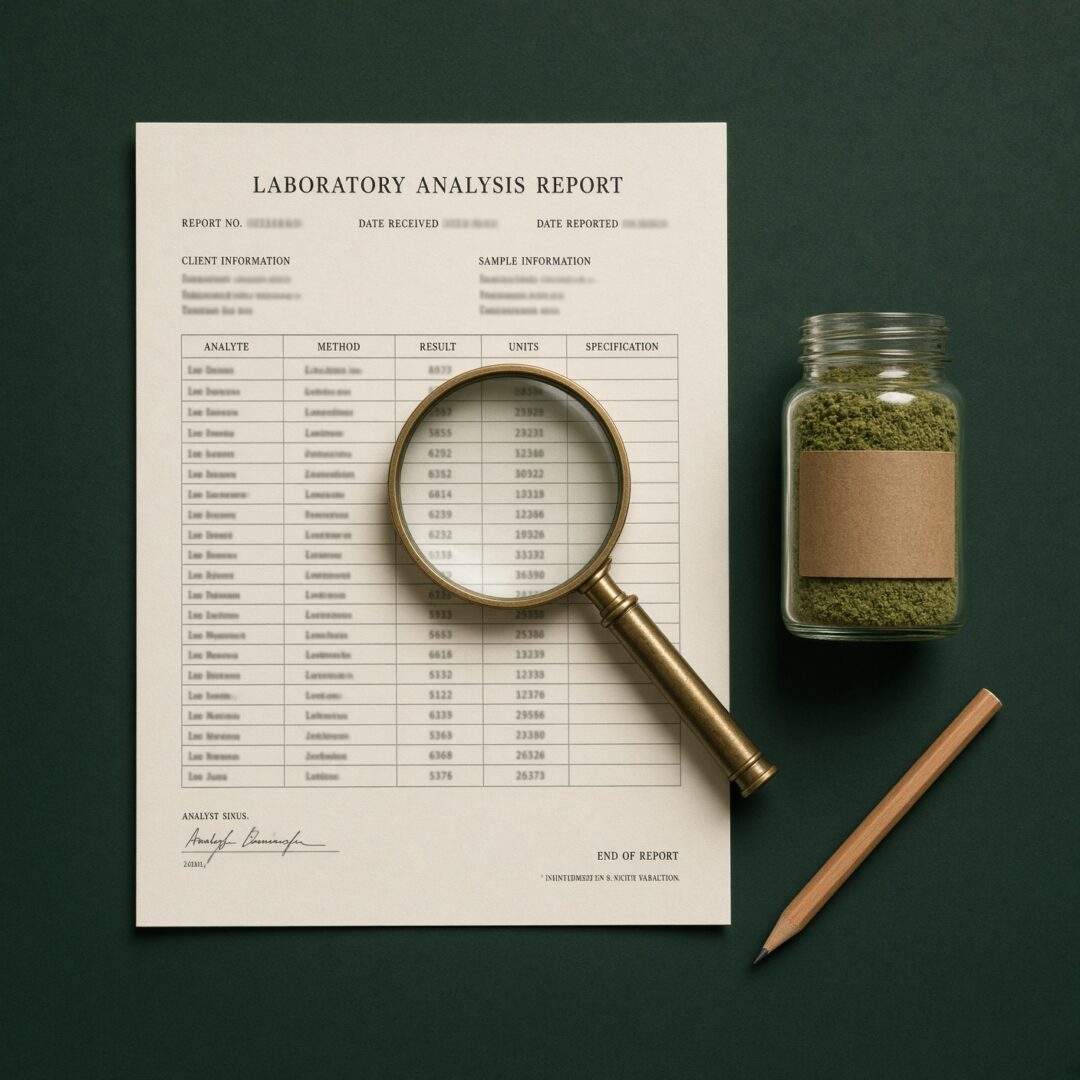

Open any thorough botanical COA and you will find a heavy metals panel: lead, arsenic, cadmium, mercury, each with a number or an ND beside it. Those numbers only mean something against reference limits, and the limits come from specific scientific bodies. Here is where they come from and how to think about them.
This article is educational context for reading lab results. It is not health advice, and kratom is not intended to diagnose, treat, cure, or prevent any condition.
Why plants contain metals at all
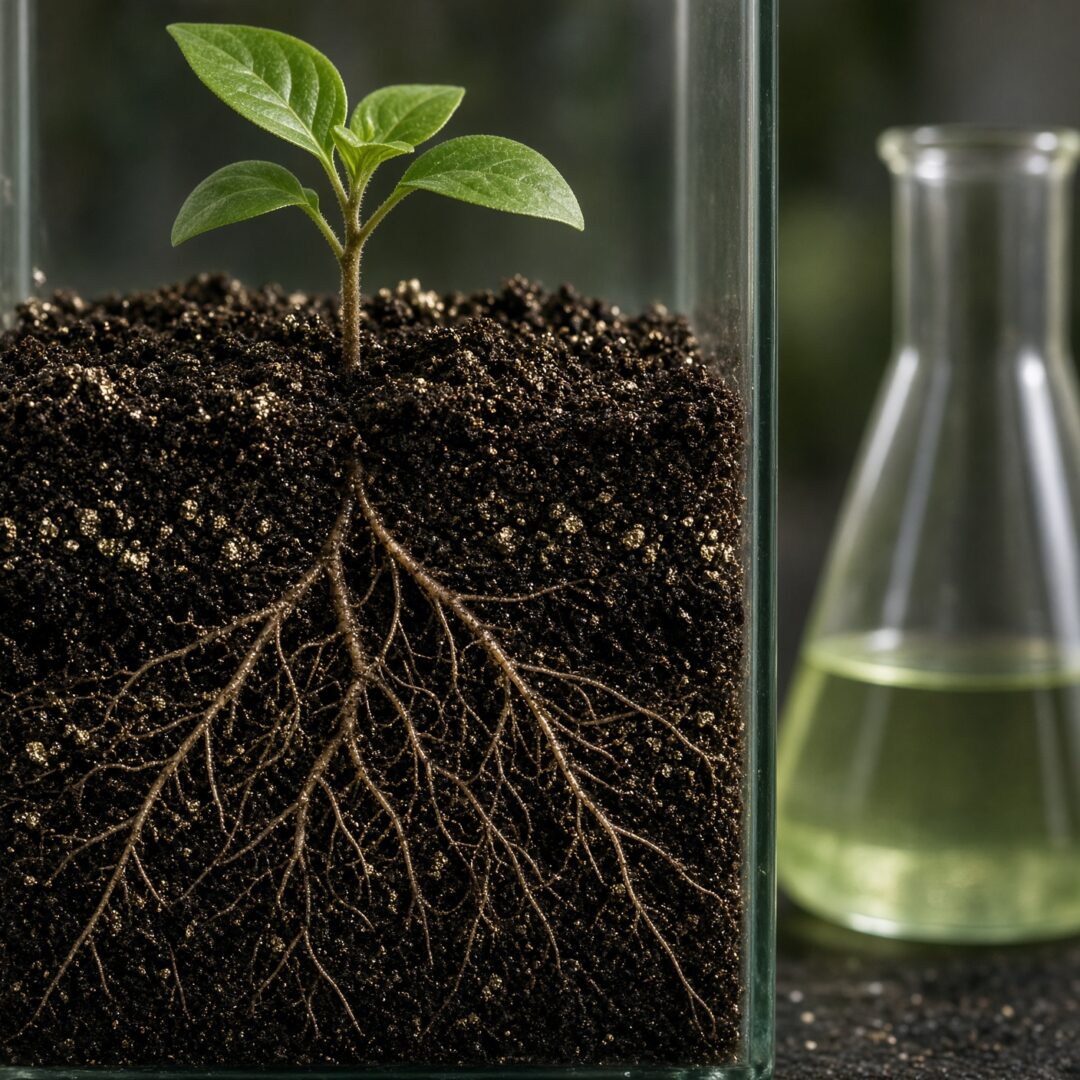
Metals occur naturally in soil, and every plant absorbs some as it grows. That is true of leafy vegetables, rice, tea, cocoa, and kratom alike. The question a lab panel answers is not whether a botanical contains any measurable metal, since at sensitive enough detection levels most agricultural products do, but how much, and how that amount compares to established reference limits.
The reference standards
Three references appear most often. The United States Pharmacopeia publishes elemental impurity guidance, USP chapter 2232, with permitted daily exposures for dietary supplement ingredients. World Health Organization committees publish intake guidance used internationally. And California’s Proposition 65 sets notably strict daily exposure levels that trigger warning requirements in that state. These standards differ from each other because they were built for different purposes, which is why the same lab result can sit differently against different references.
Amounts and exposure are different things
A COA reports concentration, such as parts per million in the powder. Exposure depends on concentration multiplied by how much of the product is actually handled or consumed over time, which is why the reference standards are expressed as daily amounts. A concentration figure on its own, without that context, is easy to misread in either direction. For those who want to explore the arithmetic, our COA pages include an exposure calculator that puts batch results alongside the USP, WHO, and Proposition 65 reference values with sources cited.
What we do about it
Every batch we stock is tested for the four major heavy metals by an independent accredited laboratory before it is sold, and the results are published openly. We treat the metals panel as a gate at the sourcing stage: leaf that tests poorly does not get purchased. That is the practical value of batch testing in an agricultural supply chain, and it is the reason the panel exists on every one of our COAs rather than on a once-a-year sample.