

Kratom has a vocabulary all its own, part botany, part trade jargon, part marketing. This glossary defines the terms you will actually meet on labels, menus, and lab reports, in plain language.
This is an educational reference. It is not advice about using any product, and kratom is not intended to diagnose, treat, cure, or prevent any condition.
The plant and its chemistry
Mitragyna speciosa: the botanical name of the kratom tree, a member of the coffee family native to Southeast Asia.
Alkaloids: naturally occurring compounds in the leaf. Kratom contains dozens; lab panels report the most abundant.
Mitragynine: the primary alkaloid in kratom leaf, typically measured between roughly one and two percent by weight in dried natural leaf.
7-hydroxymitragynine (7-OH): a trace alkaloid in natural leaf. Products with concentrated 7-OH are a separate category that regulators increasingly treat differently from leaf.
How leaf is classified
Vein color (red, green, white): a classification based on leaf maturity and drying method. Yellow and gold are created in processing rather than found on the tree.
Strain: a market name combining vein color with a region or trade name, such as Green Malay or Red Bali. Names describe origin and processing traditions, not standardized chemistry. Our Types of Kratom page covers the naming system in depth.
Maeng Da: a trade name signaling leaf selected for high alkaloid content rather than a place. The phrase originated as Thai slang.
Blend: a mix of two or more strains or vein colors, combined by the vendor.
Product formats
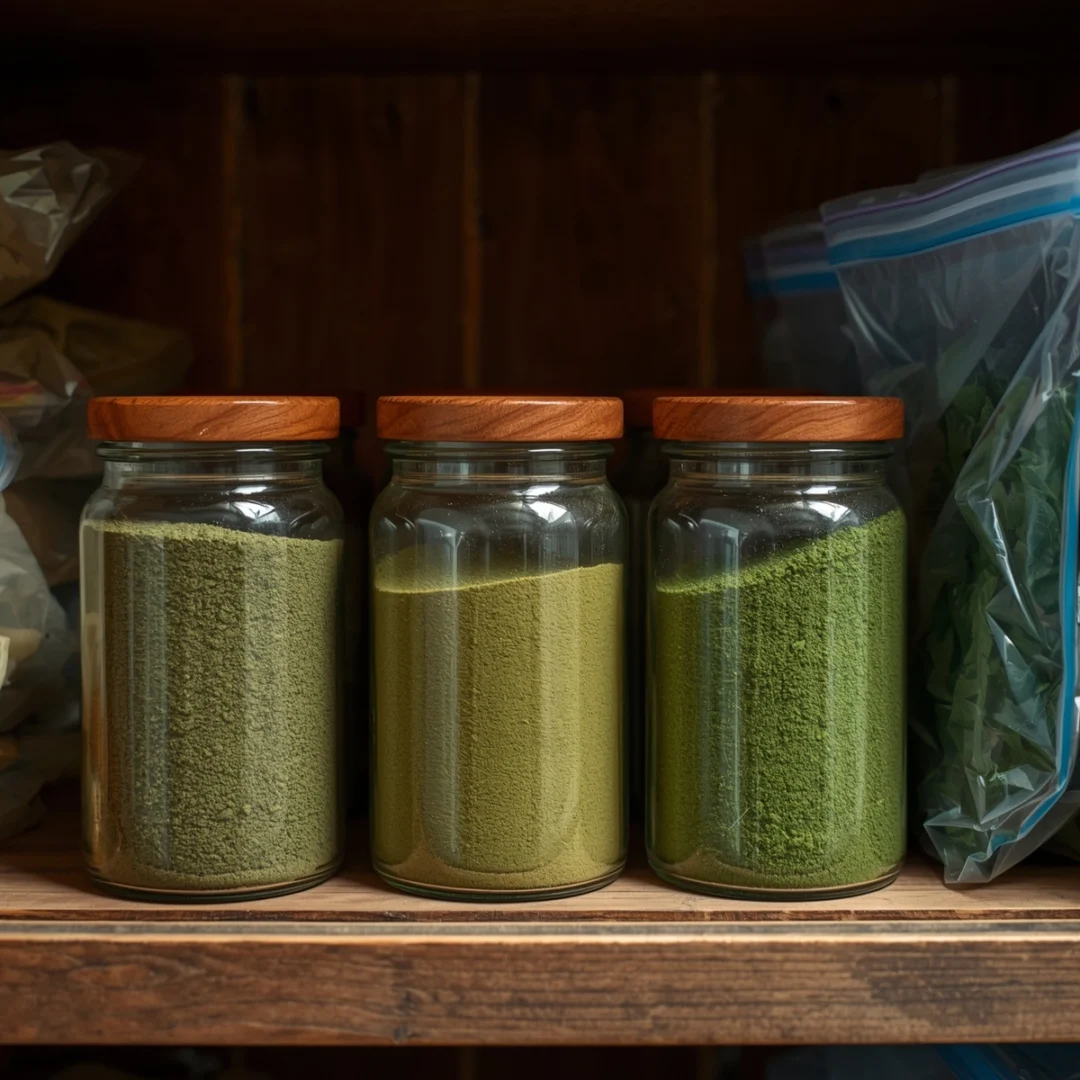
Powder: dried leaf milled fine, the most common format. Capsules: the same powder in measured gelatin or vegetable shells. Crushed leaf: coarser material, less processed than powder. Stem and vein: the leaf’s structural parts, sold separately and chemically distinct from leaf powder. Extracts: concentrated products made by processing leaf; we do not sell extracts or concentrated products.
Testing and tracking
COA (Certificate of Analysis): an independent lab report covering alkaloids, heavy metals, and microbiology for a specific batch. See our COA dashboard for live examples.
Batch / lot code: the identifier tying a bag to its harvest and its COA.
ND / less-than values: lab notation meaning a substance was not detected, or was below the smallest amount the instrument reliably measures.
Met a term we have not covered? Send it to us and we will add it.