Alkaloid profile
Measured percentages of mitragynine and 7-hydroxymitragynine, the two principal alkaloids in Mitragyna speciosa. Establishes the identity and consistency of the leaf.
- Mitragynine %
- 7-OH-mitragynine %
- Lot-to-lot consistency
Shop by vein
Shop by format
Most reached for
The lab
Enter the lot number from any pouch to open its full certificate.
Browse all 15 certificatesNo batch of Garuda Kratom reaches a pouch without passing an independent ISO 17025 lab. Every current batch's report is public, searchable by the batch number printed on its label. No "request a COA" forms. No cherry-picked results. Just the documentation, out in the open.

Every lot is screened across four panels before it's approved for packaging. If any one of them doesn't read clean, the lot doesn't become a product.
Measured percentages of mitragynine and 7-hydroxymitragynine, the two principal alkaloids in Mitragyna speciosa. Establishes the identity and consistency of the leaf.
Screened against AHPA and California Prop 65 limits for lead, cadmium, arsenic, and mercury. Any lot above threshold is rejected outright.
Total aerobic count, yeast and mold, E. coli, Salmonella. Anything a leaf could pick up between the grove and the pouch, we screen out.
Visual and sieve inspection for stem, dust, fiber, and non-leaf material. The ceiling is tight, and we enforce it on every inbound lot.
We work with a US-based analytical laboratory accredited to ISO/IEC 17025, the international standard for testing and calibration. They're not owned by us, not paid per passing result, not sharing a mailing address with our facility. That's the whole point of third-party.
Every inbound production lot is shipped to the lab, tested across our four-panel protocol, and returned with a signed certificate. If a result comes back out of spec, the lot is rejected. No negotiation. No "retest until it passes." Rejected.
Here's a redacted sample of what you'd see if you opened a batch report today. Real reports include the full lab letterhead, signature, and date.
| Panel | Analyte | Result | Limit | Status |
|---|---|---|---|---|
| Alkaloids | Mitragynine | 1.62% | Reported | Pass |
| 7-Hydroxymitragynine | 0.04% | Reported | Pass | |
| Heavy Metals | Lead | 0.42 ppm | 3.0 ppm | Pass |
| Cadmium | 0.08 ppm | 4.1 ppm | Pass | |
| Arsenic | 0.15 ppm | 10.0 ppm | Pass | |
| Mercury | 0.02 ppm | 2.0 ppm | Pass | |
| Microbials | Total aerobic count | < 10,000 CFU/g | 100,000 CFU/g | Pass |
| Yeast and mold | < 100 CFU/g | 1,000 CFU/g | Pass | |
| E. coli | Not detected | None permitted | Pass | |
| Salmonella | Not detected | None permitted | Pass | |
| Foreign Matter | Total foreign matter | 0.1% | 2.0% | Pass |
COAs aren't secret documents. They're just a lab result sheet. Here's what each line is telling you.
The top of any legitimate COA lists the lab's name, accreditation (ISO 17025), report date, and sample ID. If that's missing, the report is junk.
The batch or lot number on the COA has to match the batch printed on your pouch. That's how you know the report was actually run on the leaf you have.
A complete kratom COA covers alkaloids, heavy metals, microbials, and foreign matter. Missing panels are a red flag.
Each row lists the measured result next to the acceptable limit. "Not detected" or "below limit" on every row is what you want to see.
Real COAs are signed by a lab technician and carry the lab's letterhead. Screenshots of a single line are not a lab report.
Read the full panel-by-panel guide: How to read a kratom COA
Every Garuda Kratom pouch carries a batch code on the label. Drop it here and we'll take you to that batch's lab report.
Don't have a batch number? Browse the full COA archive.
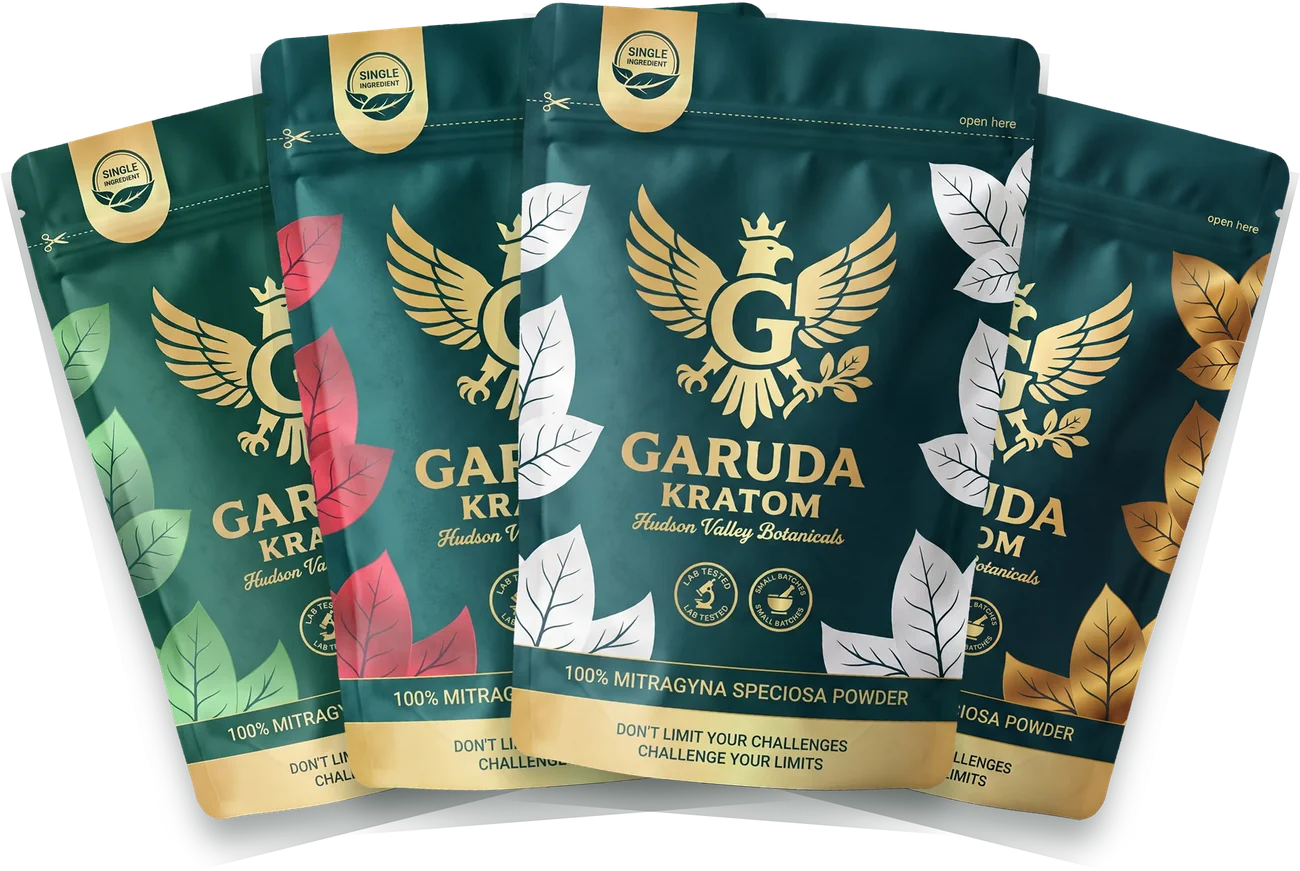
Three popular Garuda products, each with its batch-matched lab report in the public archive.
Free shipping on orders over $75 · Same-day shipping before 11am EST · Every batch publicly documented.
SALE OF KRATOM TO PERSONS UNDER TWENTY-ONE YEARS OF AGE IS PROHIBITED BY LAW
Notice required by New York State law. Other states set their own minimum age.