
Every bag of kratom starts as a leaf on a tree in Southeast Asia, most often on the Indonesian side of Borneo. How that leaf is grown, picked, and dried shapes everything a lab later measures, and it shapes the forests and farming communities the industry depends on. Here is a look at the agricultural end of the supply chain.
This article is educational background on agriculture and sourcing. It is not advice about any product, and kratom is not intended to diagnose, treat, cure, or prevent any condition.
Wild harvest and cultivated trees
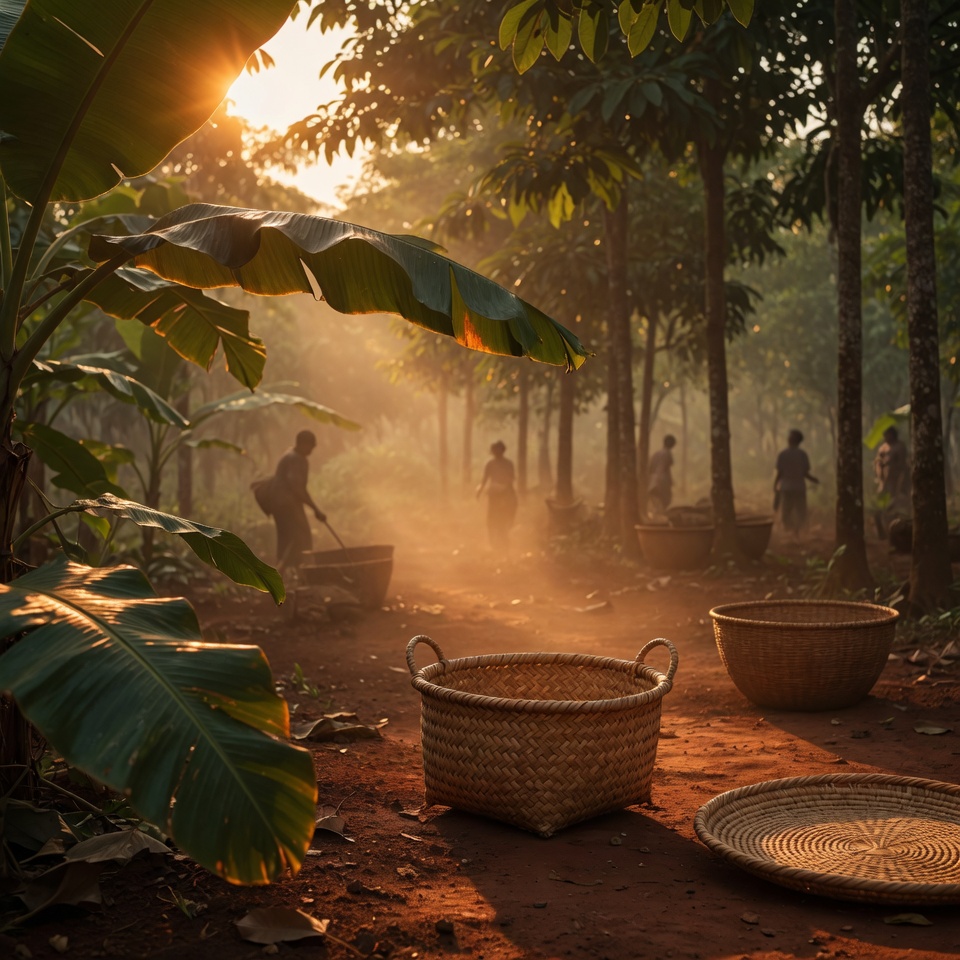
Kratom grows wild in the lowland rainforests of Borneo, and part of the supply is still harvested from wild trees, often along rivers where the species thrives. Alongside that, farmers increasingly cultivate kratom on smallholder plots, sometimes interplanted with rubber or fruit trees. Cultivation matters for sustainability: it takes pressure off wild stands, gives farming families a stable crop, and produces more consistent leaf because growers control spacing, soil, and picking schedules.
Picking is skilled work
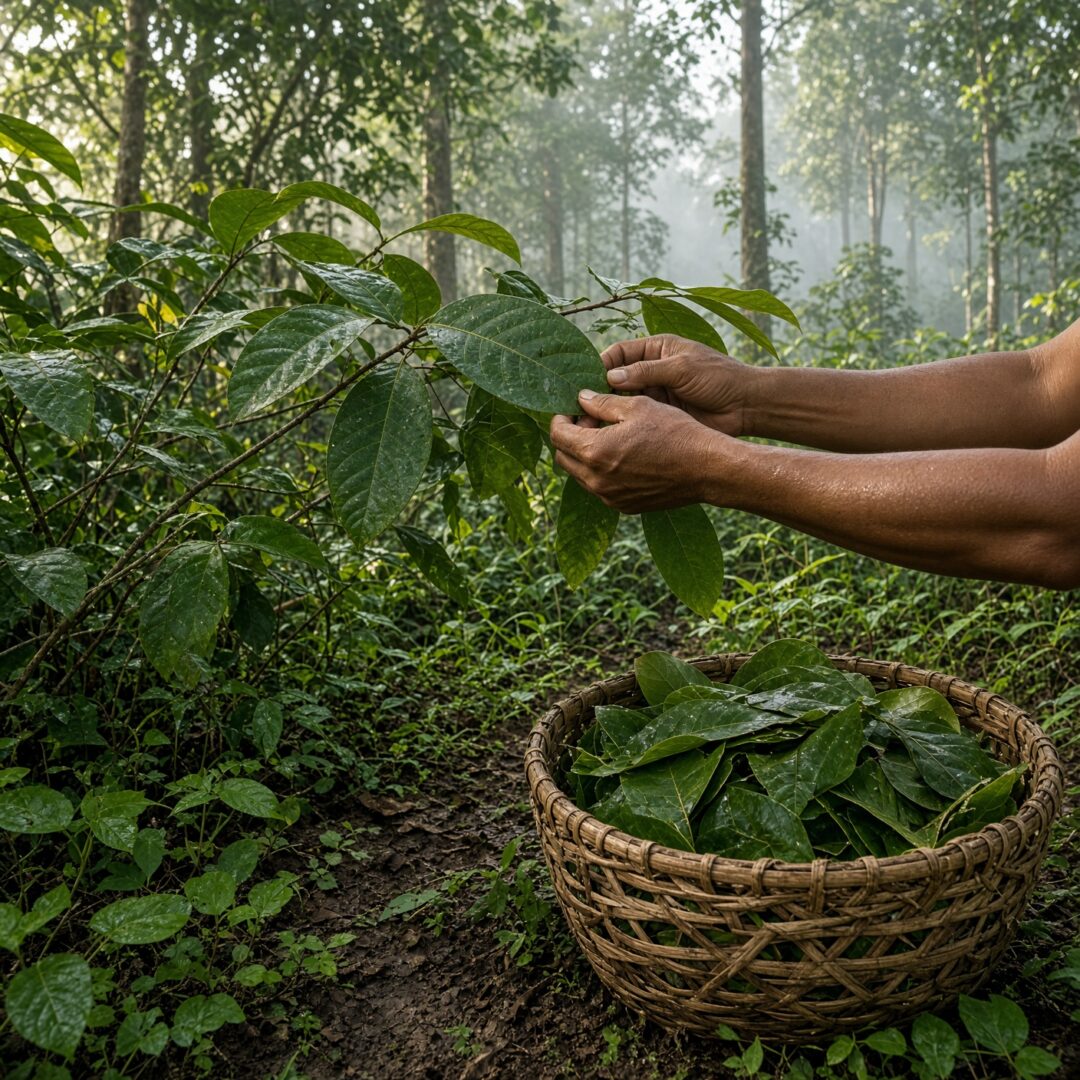
Harvesters select leaves individually by maturity, which is what the vein color system ultimately reflects. A skilled picker reads the tree, taking mature leaves and leaving young growth to develop, so the same tree can be harvested repeatedly through the year without harm. This selectivity is one reason hand-harvested leaf commands a premium over bulk stripping, which damages trees and mixes leaf ages indiscriminately.
Drying is where quality is made or lost
After washing, leaf is dried indoors, in sunlight, or in staged combinations, and the choices change the finished product’s classification and chemistry. Drying is also the food-safety critical step: clean racks, airflow, and protection from contamination separate professional operations from careless ones. The microbial panel on a COA is, in large part, a report card on somebody’s drying floor thousands of miles away.
Why the buying side matters
Vendors influence farming practices through what they reward. Paying for tested, well-handled, selectively picked leaf tells suppliers that quality practices are worth their cost. We buy in small batches, test every one independently, and reject lots that fail, which over time steers our supply toward the growers doing careful work. You can see the results of that selection on our COA dashboard, and read more about how leaf becomes powder in our Types of Kratom guide.