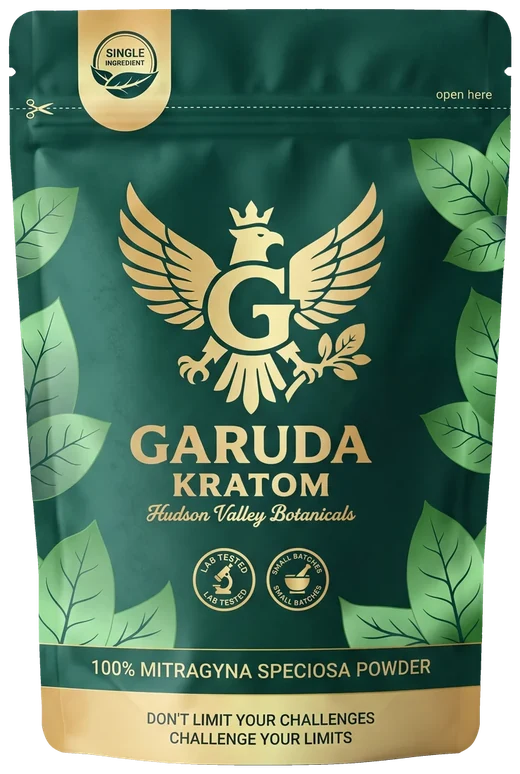
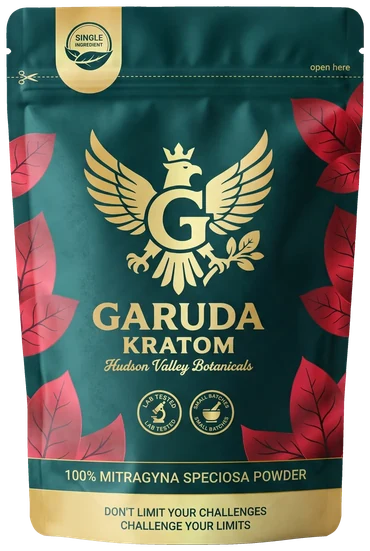
Red vein · Indonesia
Red Banjar Kratom,documented.
Red Banjar is a red vein kratom powder named for Banjar, the historic port city of South Kalimantan that served as an alternate export route for leaf from Borneo's southern rivers.
Not in rotation right nowGet a note when it’s back
Garuda strain archiveNo. 16 of 17
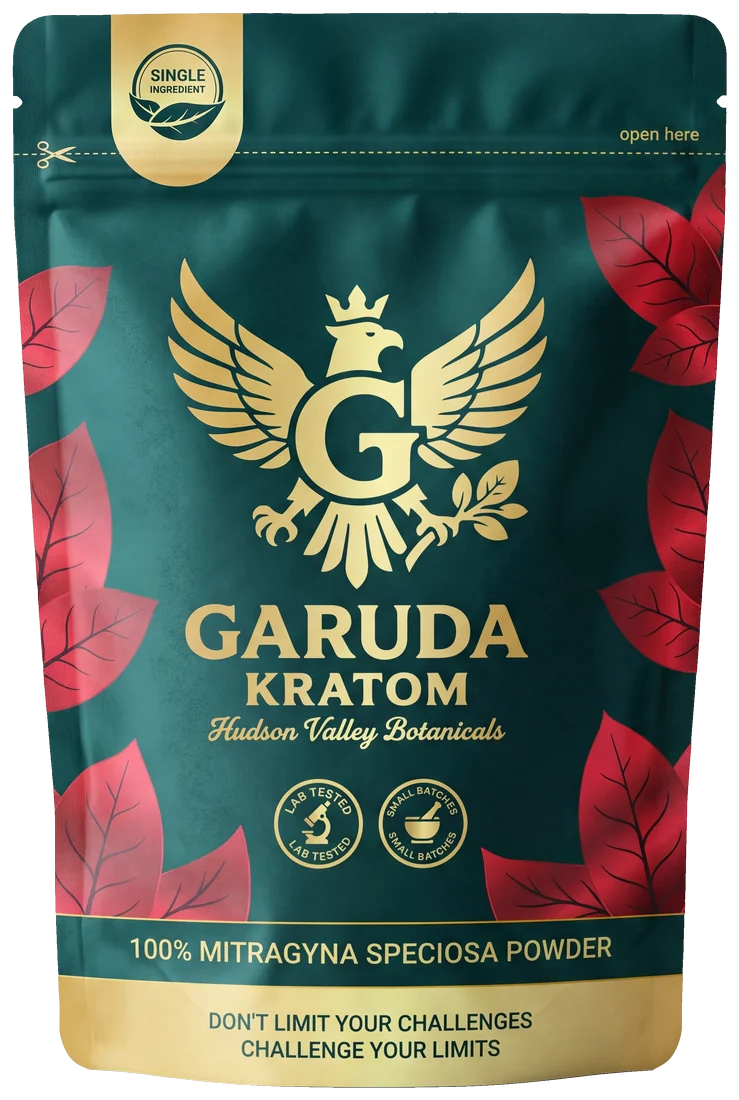
- Vein
- Red vein
- Grown in
- Indonesia
- Mitragynine on file
- No lot on file yet
- Forms
- Powder
- Testing
- Every batch, ISO 17025 lab, public COA
Mitragyna speciosaFigures from its certificates
Origin and processing
Where does Red Banjar come from?
Grown in Indonesia. Southern-river leaf carries its own heritage of strain labeling from the old Banjar trade. The red designation means full maturity at harvest and the long red dry.
The region in the name: Kalimantan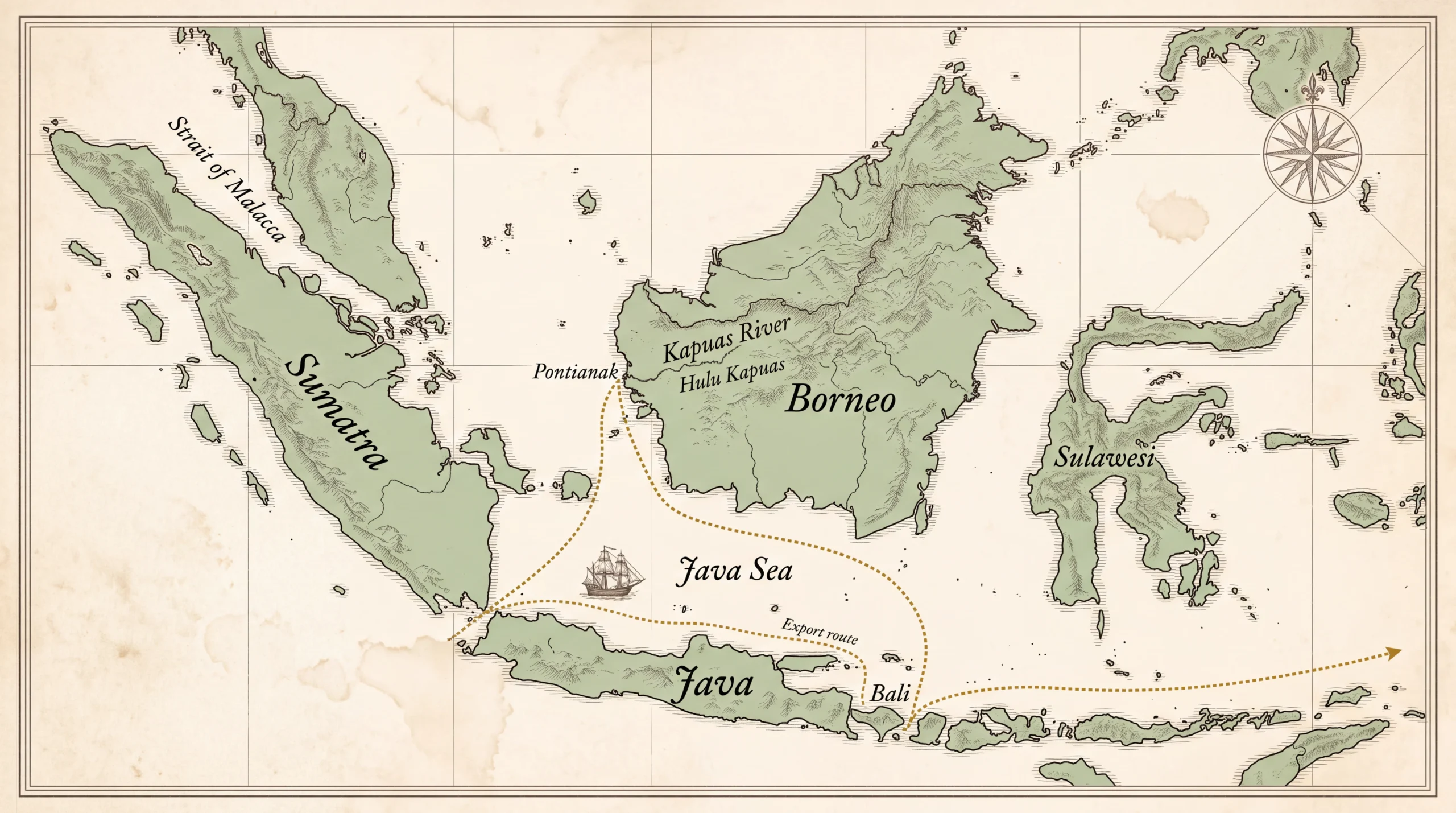 Banjar
Vein color, at a glance
The vein names describe how mature the leaf was at picking and how it was processed. Red Banjar is red vein.
White vein
- Leaf
- Young leaf, early in the growth cycle
- Dry
- Short indoor dry, minimal light
- Mitragynine on file
- 1.28% to 1.49%
Green vein
- Leaf
- Mid-maturity leaf
- Dry
- Part indoors, part outdoors
- Mitragynine on file
- 1.218% to 1.52%
This strain
Red vein
- Leaf
- Fully mature leaf, deep red central vein
- Dry
- Longest dry, often sun-finished
- Mitragynine on file
- 0.7014% to 1.08%
Gold vein
- Leaf
- Fully mature red leaf
- Dry
- A brief ferment, then the dry
- Mitragynine on file
- No lot on file
A heritage red: deep color, traditional profile, steady batches.
Lab results
What do the lab numbers look like?
Every batch of Red Banjar Kratom is tested by an independent ISO 17025 accredited laboratory before it is packaged: alkaloid profile (mitragynine and 7-hydroxymitragynine), heavy metals and microbials, plus a pesticide screen on capsule lots. Across the 3 red vein lots on file, mitragynine measured 0.7014% to 1.08%. Red vein lots test lower in mitragynine than our white and green lots. That is the leaf, not a defect. The exact number for any pouch is on its batch COA.
Mitragynine by lot, against each vein’s lots on file
Availability
Back with the next harvest.
Harvests run on the growers’ schedule, and every new lot is lab tested before it’s packaged. Get one email when Red Banjar is back, or try the closest strain in stock.
Red Banjar isn’t in rotation right now.
Sign up on the product page and we’ll send one email when it’s back in stock.
Get a note when it’s backIn stock nowRed Maeng DaAnother red vein strain from the line.Explore
More red vein strains.
Red Banjar questions
Common questions, answered straight.
The short answers. Lab figures come straight from each lot’s certificate.
Strain names describe where the leaf grew and how it was picked and dried. Lab figures describe tested lots, not every pouch. This page is botanical and lab-testing information, not medical advice.
Spotted something out of date? Tell us and we’ll review it.
What is Red Banjar Kratom?
Red Banjar is a red vein kratom powder named for Banjar, the historic port city of South Kalimantan that served as an alternate export route for leaf from Borneo's southern rivers.
Where does Red Banjar Kratom come from?
Red Banjar Kratom is Indonesian kratom. Strain names are trade names, so the name describes a style rather than a farm: Fully mature leaves, harvested when the central vein turns deep red. The lab report for each batch, searchable by the number on the pouch, shows what is in it.
How much mitragynine is in Red Banjar Kratom?
Across the 3 red vein lots on file, mitragynine measured 0.7014% to 1.08%. Red vein lots test lower in mitragynine than our white and green lots. That is the leaf, not a defect. The exact number for any pouch is on its batch COA.
How do I verify the batch in my pouch?
Every pouch of Red Banjar Kratom carries a printed batch number. Enter it in our public COA archive at hudsonvalleybotanicals.com/coas/ to see that exact lot's independent ISO 17025 lab report: alkaloids, heavy metals and microbials, plus pesticides on capsule lots.
Keep exploring