How is kratom powder actually made?
Seven steps separate a tree on a Bornean riverbank from the labeled pouch on your counter, and every one of them shapes what ends up on the lab report. Here is the whole chain, harvest to batch number, the way it happens on our line.
Leaf to pouch, in order.
Harvest by maturity
Pickers select leaf by the vein color the lot is destined for: young leaf for whites, mid-maturity for greens, fully mature leaf for reds. In the main growing regions, this is family work done by hand.
Dry under cover
Fresh leaf moves quickly to covered, ventilated drying sheds. Light exposure is managed deliberately: minimal for whites, balanced for greens, longer with a sun finish for reds. Gold lots get a brief ferment before their dry.
Devein and sort
Dried leaf is stripped of its central rib and stems, raising the leaf-to-stem ratio, and sorted so only sound leaf continues. What the mill receives determines everything about the finished powder.
Mill fine
Sorted leaf is ground to a fine, uniform powder. Consistent milling is a visible quality marker; the color should be even within a vein type, with no grit and no clumps.
Test the batch
A sample from every incoming lot goes to an independent ISO 17025 accredited laboratory: alkaloid profile, heavy metals and microbials, plus a pesticide screen on capsule lots. A lot that fails specification is rejected or retested; it is never packaged.
Pack and seal
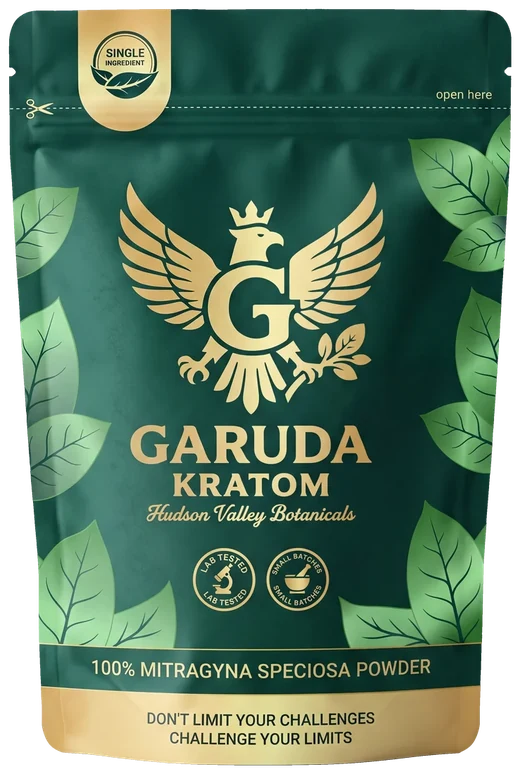
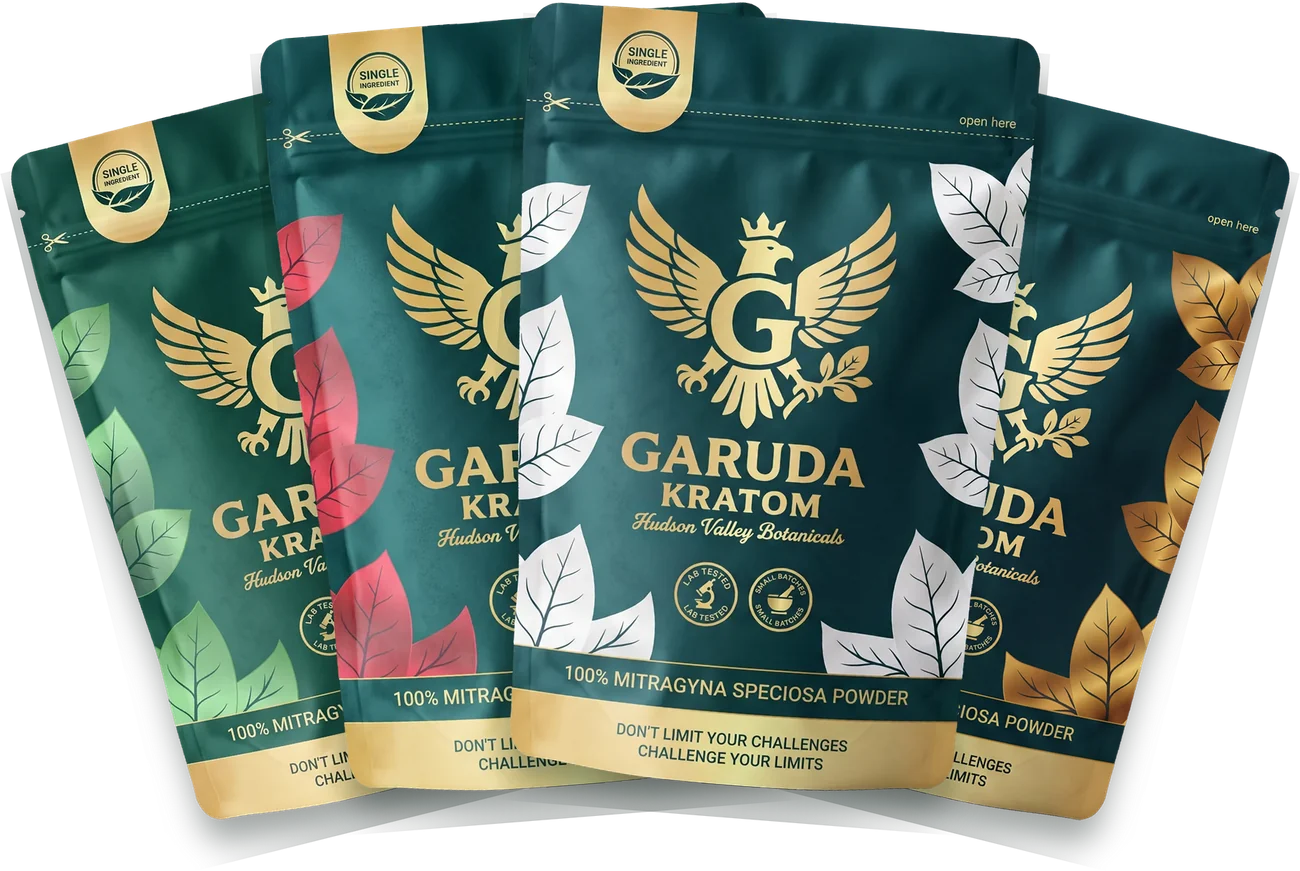
Passing lots are hand-packed in the Hudson Valley into opaque, resealable, moisture-barrier pouches. The packaging is the first layer of storage: sealed, dark, and dry from minute one.
Label with the batch
Every pouch gets its strain name, weight, manufacture date, alkaloid percentage, and a unique batch number that looks up the lot's full lab report in our public COA archive. The chain from pouch to report stays unbroken.
Common questions, answered straight.
How is kratom powder made?
In seven steps: leaf is harvested by maturity, dried under cover with managed light exposure, deveined and sorted, milled to a fine powder, lab tested by an independent ISO 17025 laboratory, packed into sealed opaque pouches, and labeled with a batch number that links to its published certificate of analysis.
What makes one kratom powder different from another?
Three levers: when the leaf is picked (vein maturity), how it is dried (light, duration, and any ferment), and where it grew (region, soil, and climate). Everything else is milling quality and testing discipline.
Is anything added to the powder?
No. Garuda Kratom powder is dried, deveined, milled Mitragyna speciosa leaf and nothing else. The batch COA exists so you never have to take that on faith.
Where does the processing happen?
Harvest, drying, deveining, and milling happen at origin in Indonesia, close to the farms. Lab testing, packing, and labeling happen on our side: every lot is tested before packaging, and pouches are hand-packed in the Hudson Valley, New York.
This page describes harvesting, processing, testing, and packaging and is not medical advice. Kratom products are not intended to diagnose, treat, cure, or prevent any disease. These statements have not been evaluated by the FDA.