What is on a kratom label, and why?
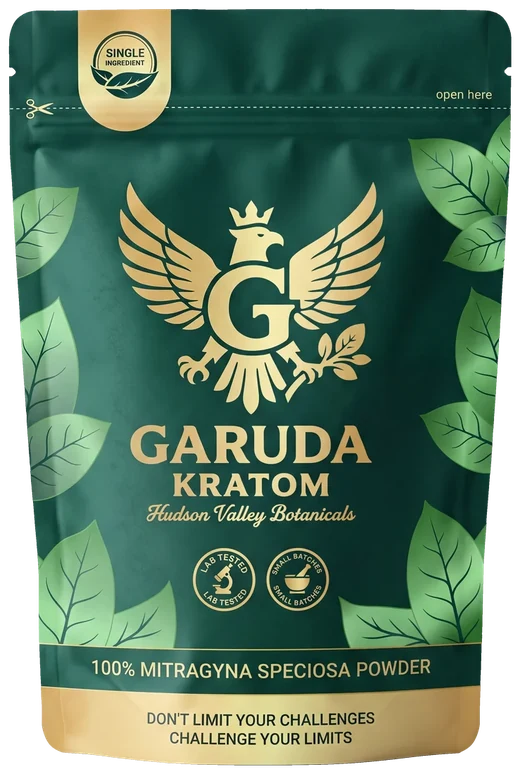
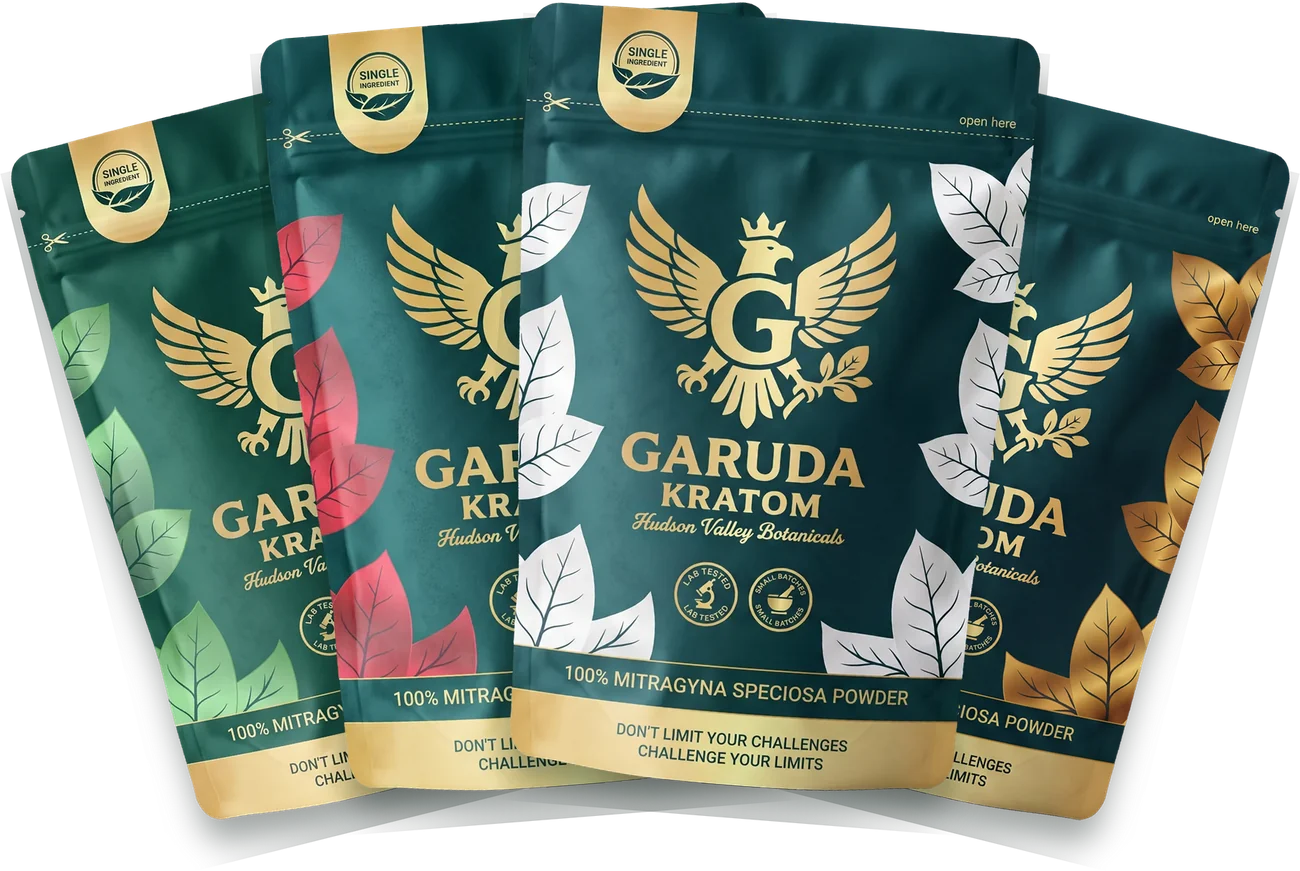
A compliant kratom label is a chain of verifiable facts, and every line on a Garuda pouch is there for a reason. Here is each element, what it means, and what it connects to, from the strain name at the top to the batch number that opens the lab report.
Seven things on the pouch, decoded.
Strain name and vein
The sourcing identity: strain (Red Bali, Green Hulu) and its vein designation. This maps to a strain page, a region, and a processing method, not to any claim about what the product does.
Net weight
The contents by weight, from 28g sampler pouches to 1kg bulk. Kratom powder is sold by weight, never by volume.
Batch number
The most important line on the label. It ties this exact pouch to the lot it came from and to that lot's certificate of analysis in our public archive. Enter it at hudsonvalleybotanicals.com/coas/ and the report appears.
Alkaloid percentage
The measured mitragynine content of this batch, printed from the lab result rather than a generic claim. KCPA-style state laws commonly require this disclosure; we print it everywhere.
Manufacture date
When the batch was packed. Paired with proper storage, dried leaf stays consistent for 12 to 18 months from this date, so the label doubles as your freshness reference.
Compliance text
The required statements: adult-use only, the FDA disclaimer that the product is not intended to diagnose, treat, cure, or prevent any disease, and keep-out-of-reach language. Their presence is itself a signal the vendor takes labeling law seriously.
The motto
One line we print on every pouch: Don't limit your challenges. Challenge your limits. It is the company signature, and the only thing on the label that is not a specification.
Common questions, answered straight.
What should a kratom label include?
At minimum: the strain and vein, net weight, a batch or lot number that links to a certificate of analysis, the measured alkaloid content, a manufacture date, and the required compliance statements including the FDA disclaimer. Several state KCPA laws make most of this mandatory; a label missing the batch number or alkaloid content is a red flag.
What does the batch number on my pouch do?
It connects your specific pouch to the lab report for the lot it came from. Enter the batch number in our public COA archive and you see that lot's alkaloid, heavy metals and microbial results (capsule lots add a pesticide screen). No account or request form is needed.
Why does the label show an alkaloid percentage?
Because it was measured. Each batch's mitragynine content comes from independent ISO 17025 lab testing, and printing the batch figure on the label is both a KCPA labeling standard and the honest alternative to a generic potency claim.
Why do Ohio pouches look different?
Ohio's 2026 rule permits only natural kratom in vegetation form and bars food, drug, or supplement-style marketing. Ohio orders therefore ship in a plain, unbranded pouch carrying the product name, weight, batch number, and required regulatory text, with no serving-size or supplement-style language. The kratom inside is the same lab-tested Garuda powder.
This page covers labeling and testing documentation only and is not medical advice. Kratom products are not intended to diagnose, treat, cure, or prevent any disease. These statements have not been evaluated by the FDA.