
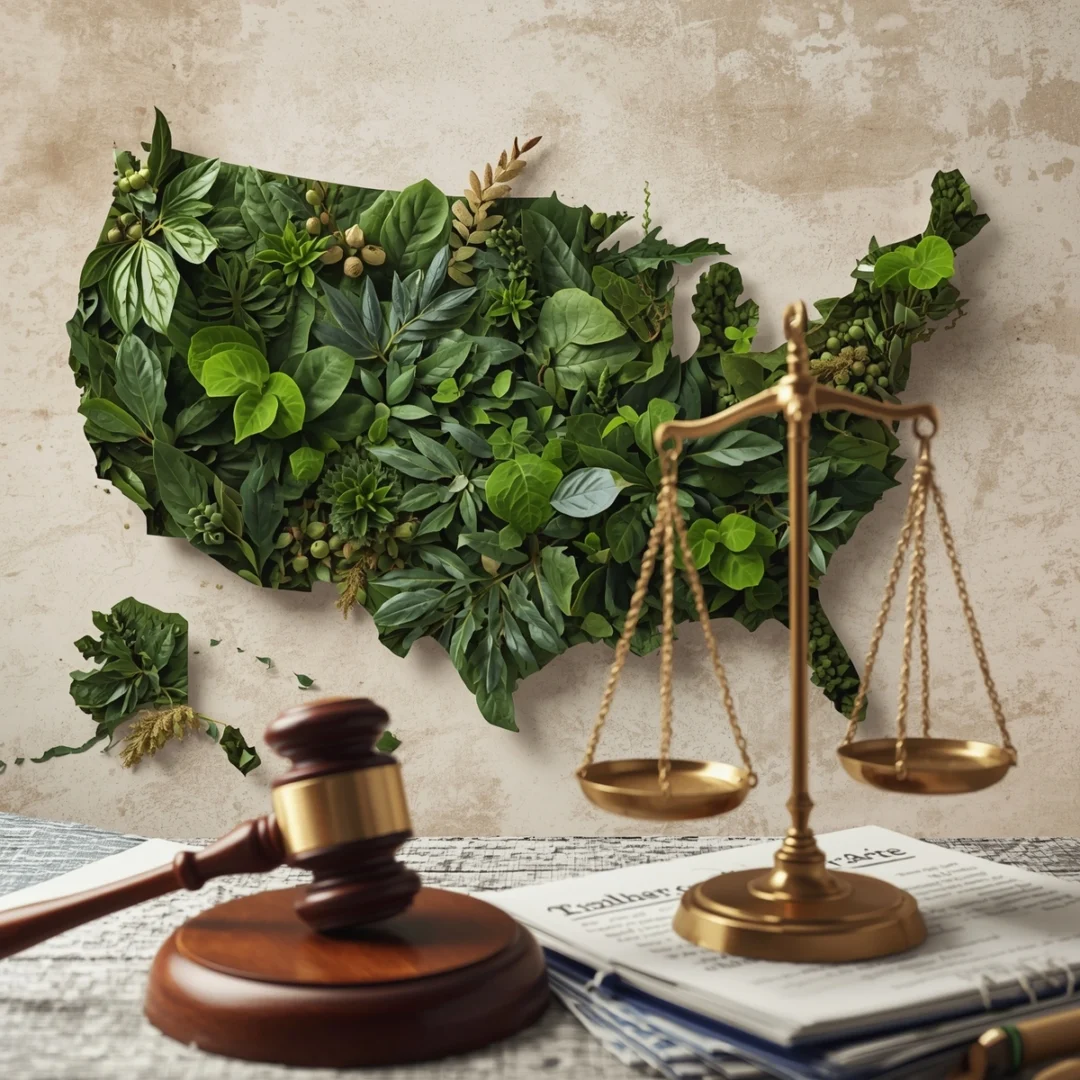
Kratom’s legal status in the United States is not one rule but a patchwork. It is legal under federal law, banned in a handful of states, regulated (not banned) in many others, and subject to its own local rules in some counties and cities. Because those rules change, the single most important habit is to confirm the current law where you live and where you plan to travel before you buy or carry kratom. This guide explains the framework so you know what to check.
This article describes the regulatory landscape in general terms. It is not legal advice, and laws change; verify your state and local rules with an authoritative source before acting.
Federally legal, with agencies watching
At the federal level, kratom is legal and is not a controlled substance. It is not approved by the FDA for any use, and federal agencies have taken various positions on it over the years, but no federal ban is in place. That federal status is the backdrop against which every state and local rule is written.
State bans
A small number of states prohibit kratom outright. The long-standing statutory bans are in Alabama, Arkansas, Indiana, Rhode Island, Vermont, and Wisconsin. Legislation is introduced (and sometimes reversed) in other states from year to year, which is why any printed list can fall out of date. Treat the six above as the established bans and always confirm your own state’s current status, because a bill can change the picture in a single legislative session.
Regulation instead of prohibition: the KCPA
Many states have chosen to regulate kratom rather than ban it, most often by adopting a version of the Kratom Consumer Protection Act (KCPA). A KCPA does not outlaw kratom; it sets ground rules for the products that are sold. Common provisions include:
- Minimum age requirements for purchase.
- Accurate labeling, including ingredients and alkaloid content.
- Limits on contaminants and on dangerously concentrated or adulterated products.
- Registration or disclosure requirements for sellers.
The number and details of KCPA states shift as new bills pass, so rather than memorize a roster, it is more useful to know what a KCPA does: it keeps kratom legal while setting a quality-and-safety floor for what can be sold.
Local rules still apply
Even where a state permits kratom, individual counties and cities may set their own restrictions or age rules. San Diego and Sarasota County are two well-known examples of local action. A product that is legal statewide can still be restricted in a particular municipality, so local ordinances are worth a quick check.
How to stay current
The practical takeaways are simple. Confirm your state’s status before ordering. Check for any county or city rules where you live. If you are shipping to a different address or traveling, verify the destination too. Reputable sellers also maintain shipping restrictions that reflect these laws. At Hudson Valley Botanicals, we restrict shipments to areas where kratom is not permitted, and you are always welcome to contact us if you are unsure whether we can ship to your location.