
If you follow kratom news, you have likely seen the term 7-hydroxymitragynine—commonly abbreviated as 7-OH—appearing in headlines, regulatory discussions, and product labels. This naturally occurring alkaloid found in the kratom leaf has become one of the most discussed compounds in the botanical supplement world, drawing attention from scientists, regulators, and consumers alike. But what exactly is 7-OH, and why does it matter so much? In this article, we break down the science, the regulatory landscape, and what every kratom consumer should understand about this important compound.
Understanding 7-Hydroxymitragynine: The Basics
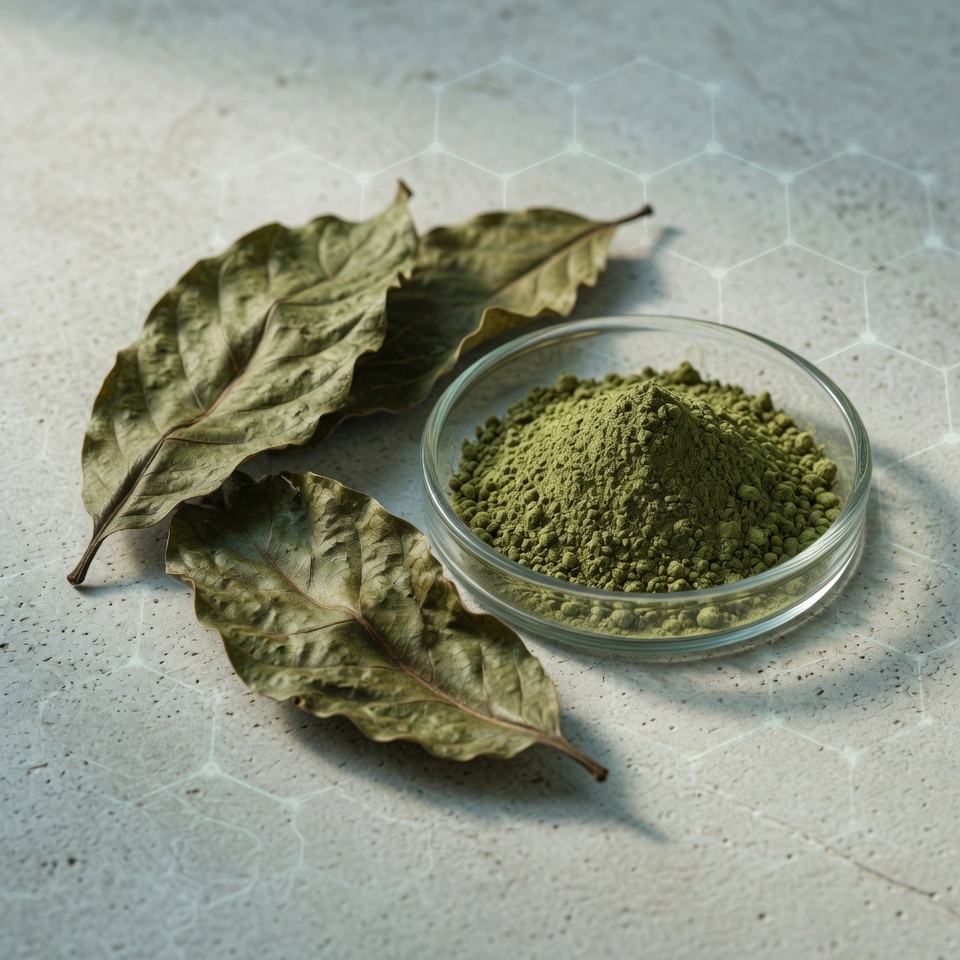
7-Hydroxymitragynine (7-OH) is one of over 40 naturally occurring alkaloids found in the leaves of the kratom tree (Mitragyna speciosa). While mitragynine is the most abundant alkaloid in kratom leaf material, typically comprising 60–66% of the total alkaloid content, 7-OH is present in much smaller concentrations—generally estimated at roughly 0.01% to 0.04% of the dry leaf weight. Despite its low natural abundance, 7-OH has attracted significant scientific interest because preclinical (laboratory and animal) studies suggest it has a notably higher binding affinity at certain receptor sites compared to mitragynine.
It is important to emphasize that most published research on 7-OH has been conducted in vitro (in laboratory cell models) or in animal models, not in controlled human clinical trials. Drawing direct conclusions about human effects from preclinical data requires caution, and much more research is needed before definitive statements can be made about 7-OH’s role in human physiology.
The Chemistry: How 7-OH Relates to Mitragynine
From a chemical standpoint, 7-hydroxymitragynine is an oxidized derivative of mitragynine. The “7-hydroxy” in its name refers to the addition of a hydroxyl group (-OH) at the 7th position of the mitragynine molecule. This structural modification, while seemingly minor, significantly changes the compound’s pharmacological properties according to preclinical research.
There are two primary ways 7-OH can be present in kratom products:
- Natural occurrence: 7-OH exists naturally in fresh and dried kratom leaves, though at very low concentrations. The amount can vary depending on the age of the leaf, the specific tree, growing conditions, harvest timing, and post-harvest processing methods such as sun exposure during drying.
- Metabolic conversion: Research published in the journal ACS Chemical Neuroscience and other peer-reviewed publications has demonstrated that mitragynine can be converted to 7-OH through metabolic processes. Specifically, liver enzymes (particularly CYP3A4) can oxidize mitragynine into 7-OH. This means that some portion of the mitragynine consumed when taking kratom leaf products may be converted to 7-OH within the body.
This metabolic conversion pathway has led some researchers to hypothesize that 7-OH may play a role in the overall experience of consuming whole kratom leaf, even though the compound is present in only trace amounts in the raw plant material. However, the extent of this conversion and its significance in humans remains an active area of scientific investigation.
Preclinical Research: What Science Has Found So Far
The scientific literature on 7-OH, while growing, remains limited compared to well-studied pharmaceutical compounds. Here is a summary of key findings from preclinical research:
- Receptor binding studies: In vitro studies have shown that 7-OH binds to mu-opioid receptors with considerably higher affinity than mitragynine. Some early studies estimated it to be roughly 13 times more potent than morphine at these receptor sites in laboratory models, though these figures come from preclinical assays and cannot be directly extrapolated to human experience.
- Partial agonist activity: Like mitragynine, 7-OH has been characterized in some studies as a partial agonist at mu-opioid receptors, which is pharmacologically distinct from full agonists. This distinction is considered significant by researchers studying the compound’s safety profile.
- G-protein biased signaling: Some research has suggested that kratom alkaloids, including 7-OH, may exhibit “biased agonism,” preferentially activating certain intracellular signaling pathways (G-protein pathways) over others (beta-arrestin pathways). This is an area of active research interest, particularly at institutions like the University of Florida and Memorial Sloan Kettering, though findings remain preliminary.
- Additional receptor activity: Beyond mu-opioid receptors, preclinical studies have identified that 7-OH may interact with delta-opioid receptors, kappa-opioid receptors, and adrenergic receptors, suggesting a complex pharmacological profile.
These statements have not been evaluated by the Food and Drug Administration. This product is not intended to diagnose, treat, cure, or prevent any disease.
7-OH in the Regulatory Spotlight
The regulatory status of 7-OH has become one of the most pressing issues in the kratom industry. Several important regulatory developments have centered specifically on this alkaloid:
FDA Attention
The U.S. Food and Drug Administration (FDA) has focused considerable attention on 7-OH in its public communications about kratom. The agency has cited 7-OH’s opioid receptor binding activity in its arguments regarding kratom classification. The FDA’s use of computational models (such as the PHASE model) to analyze kratom alkaloids has been a point of contention, with critics—including independent scientists and the American Kratom Association—arguing that these models have significant limitations and do not account for kratom’s complex, multi-alkaloid pharmacology.
State-Level Regulation
Some states have begun specifically addressing 7-OH in their kratom legislation. Certain states that have passed the Kratom Consumer Protection Act (KCPA) include provisions that set maximum allowable concentrations of 7-OH in kratom products sold within their borders. These concentration limits are intended to ensure that products on the market reflect the naturally occurring alkaloid profile of kratom leaf rather than synthetically enriched formulations. You can check the legal status in your state on our About Kratom page.
Synthetic and Enhanced 7-OH Products
A particularly important regulatory concern involves synthetic 7-OH products and heavily concentrated 7-OH extracts that have appeared on the market. These products, sometimes marketed as “7-OH tablets,” “7-OH shots,” or “enhanced kratom,” may contain concentrations of 7-OH that far exceed what is found naturally in kratom leaf. The American Kratom Association (AKA) has taken a strong position distinguishing between naturally occurring 7-OH in whole-leaf kratom products and synthetic or highly concentrated 7-OH products, arguing that the latter represent a different regulatory and safety category entirely.
Natural 7-OH vs. Synthetic 7-OH: An Important Distinction
One of the most critical distinctions for consumers to understand is the difference between naturally occurring 7-OH in kratom leaf products and synthetic or highly concentrated 7-OH products:
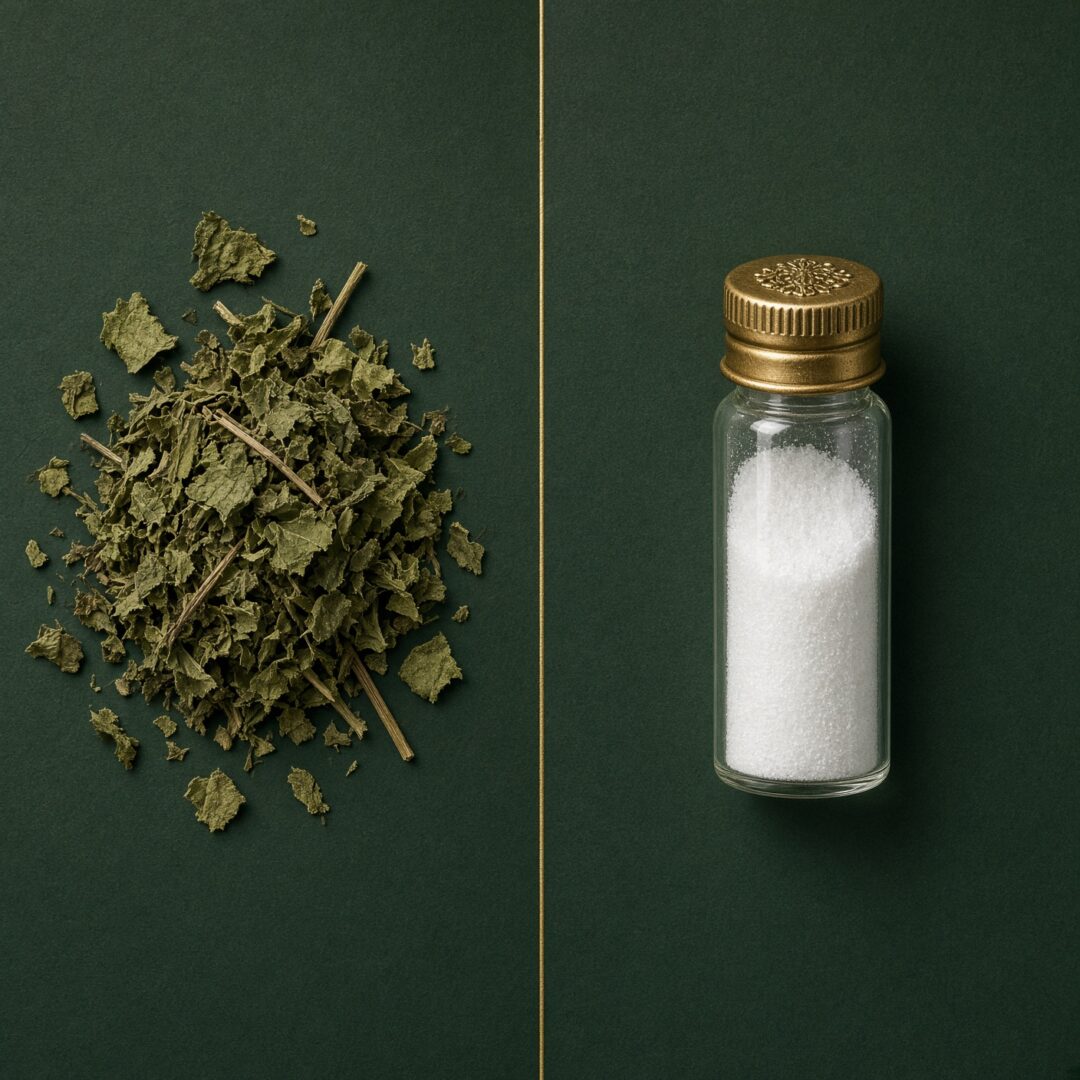
- Whole-leaf kratom products (powder, crushed leaf, tea) contain 7-OH at naturally occurring trace levels (typically 0.01–0.04% of dry leaf weight). In these products, 7-OH exists alongside dozens of other alkaloids that may modulate its activity through what researchers refer to as the “entourage effect.”
- Synthetic or concentrated 7-OH products may contain levels of isolated 7-OH that are many times higher than what occurs naturally. These products strip the compound from the context of the full alkaloid profile, which is fundamentally different from consuming whole-leaf kratom.
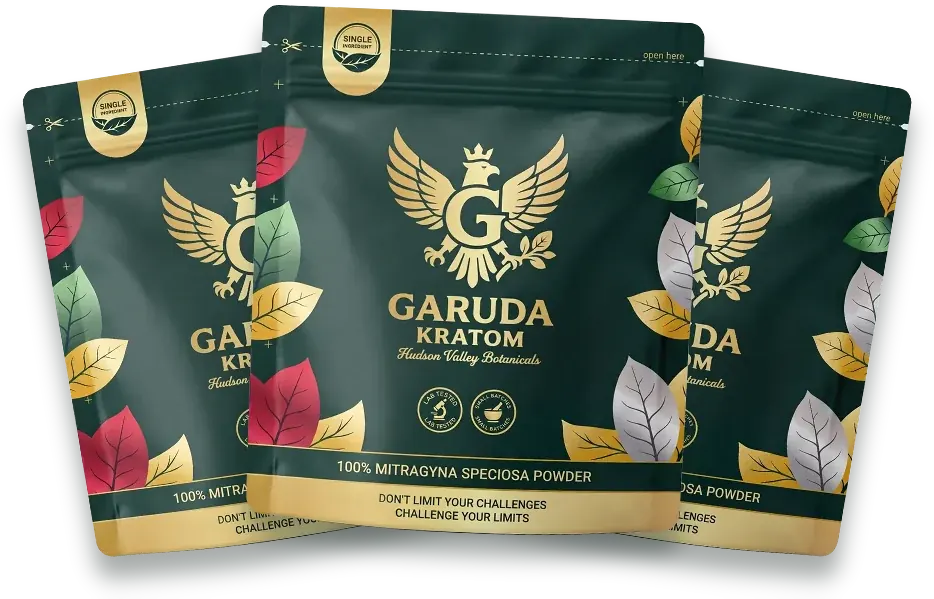
At Hudson Valley Botanicals, we sell only natural, whole-leaf kratom products with naturally occurring alkaloid profiles. We do not sell synthetic 7-OH products, concentrated 7-OH extracts, or enhanced products with artificially elevated 7-OH levels. Every batch we sell is third-party lab tested with full alkaloid profiling, so you can verify the natural alkaloid content yourself.
How Lab Testing Addresses 7-OH Transparency
Reputable kratom vendors provide Certificates of Analysis (COAs) from independent, third-party laboratories that include alkaloid profiling. A quality COA will show the concentrations of key alkaloids including mitragynine and 7-hydroxymitragynine, allowing consumers to verify that a product’s alkaloid content is consistent with natural kratom leaf. Here’s what to look for:
- Mitragynine content: Typically 1–2% in standard leaf powder, potentially higher in extracts.
- 7-OH content: Should be very low in whole-leaf products (often below 0.1%). Unusually high 7-OH readings may indicate adulteration or synthetic addition.
- Full alkaloid profile: Quality testing includes multiple alkaloids, not just mitragynine and 7-OH.
- Contaminant testing: Heavy metals, microbial contamination, and adulterants should also be tested.
You can view lab results for all of our products on our COAs page. Transparency about alkaloid content—including 7-OH levels—is a cornerstone of responsible kratom commerce.
What This Means for Kratom Consumers
As a kratom consumer, understanding 7-OH helps you make more informed decisions. Here are practical takeaways:
- Ask about alkaloid profiles: When purchasing kratom, look for vendors who provide complete COAs that include 7-OH testing. If a vendor cannot tell you the 7-OH content of their products, consider that a red flag.
- Understand what you are buying: There is a significant difference between whole-leaf kratom products with naturally occurring 7-OH and concentrated or synthetic 7-OH products. Know which category a product falls into before purchasing.
- Stay informed on regulations: 7-OH is increasingly being addressed in state and federal regulatory discussions. Staying informed about regulatory developments in your state helps you understand your rights and the products available to you.
- Support responsible vendors: Choose vendors who are transparent about their products’ alkaloid content, who follow Good Manufacturing Practice (GMP) standards, and who clearly distinguish between natural kratom products and synthetic or enhanced products.
The Future of 7-OH Research
The scientific understanding of 7-hydroxymitragynine is still evolving. Several universities and research institutions are conducting ongoing studies examining this alkaloid’s pharmacology, safety profile, and role within the broader context of kratom’s multi-alkaloid composition. Key areas of active research include:
- The extent and variability of mitragynine-to-7-OH metabolic conversion in humans
- The role of the entourage effect—how other kratom alkaloids may modulate 7-OH’s activity
- Long-term safety data on both naturally occurring and synthetic 7-OH
- The pharmacokinetics (absorption, distribution, metabolism, and elimination) of 7-OH in humans
As research progresses, our understanding of 7-OH will continue to become more nuanced and complete. At Hudson Valley Botanicals, we are committed to staying at the forefront of the science and sharing accurate, evidence-based information with our community. Have questions about 7-OH or the alkaloid content of our products? Contact our team—we are always happy to help.
These statements have not been evaluated by the Food and Drug Administration. This product is not intended to diagnose, treat, cure, or prevent any disease.