Hudson Valley Botanicals
Certificate of Analysis
3 of 3 panels passed
Shop by vein
Shop by format
Most reached for
The lab
Enter the lot number from any pouch to open its full certificate.
Browse all 16 certificatesIndependent lab results
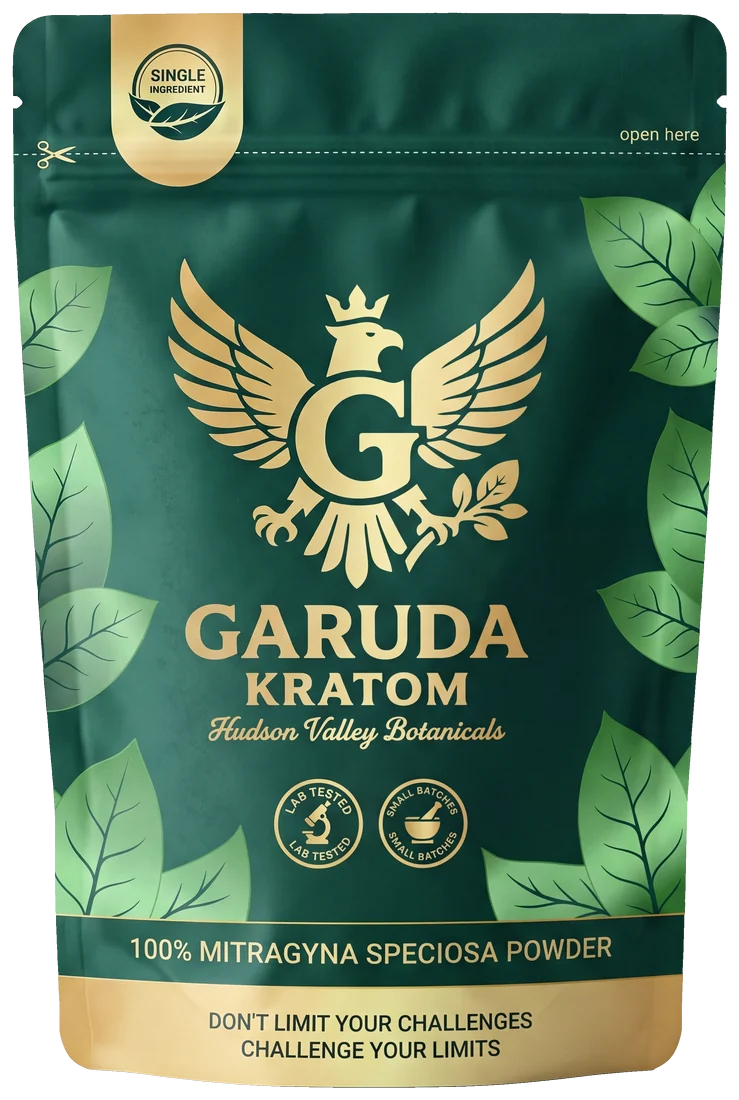
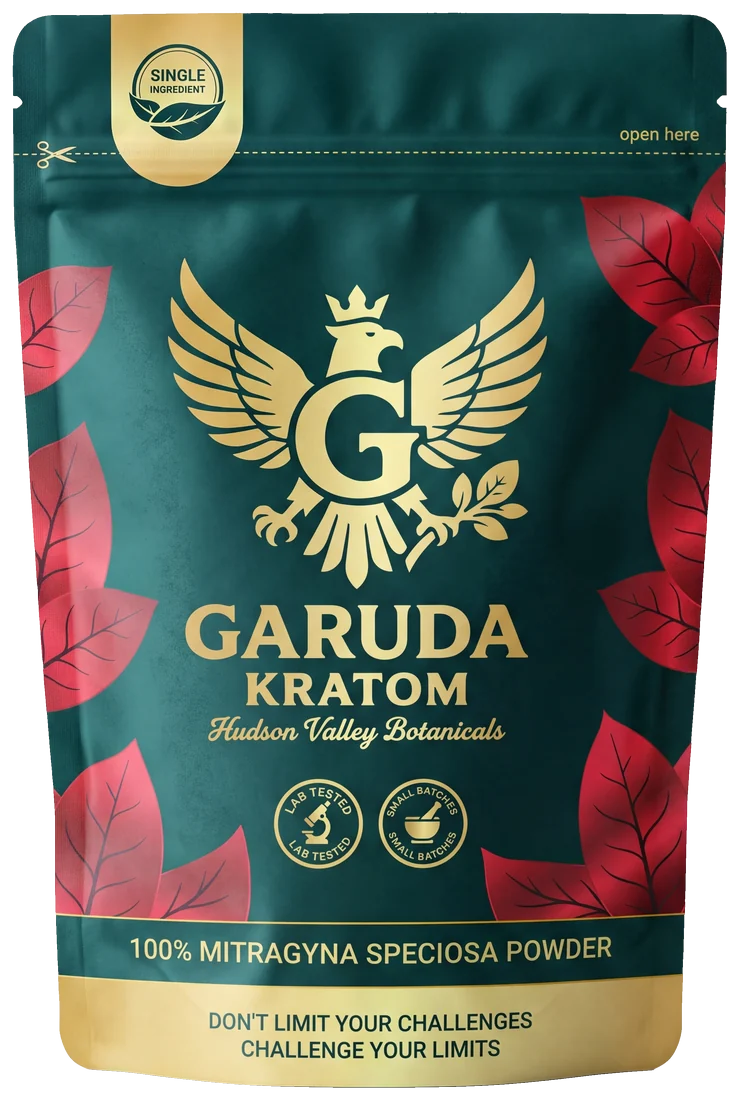
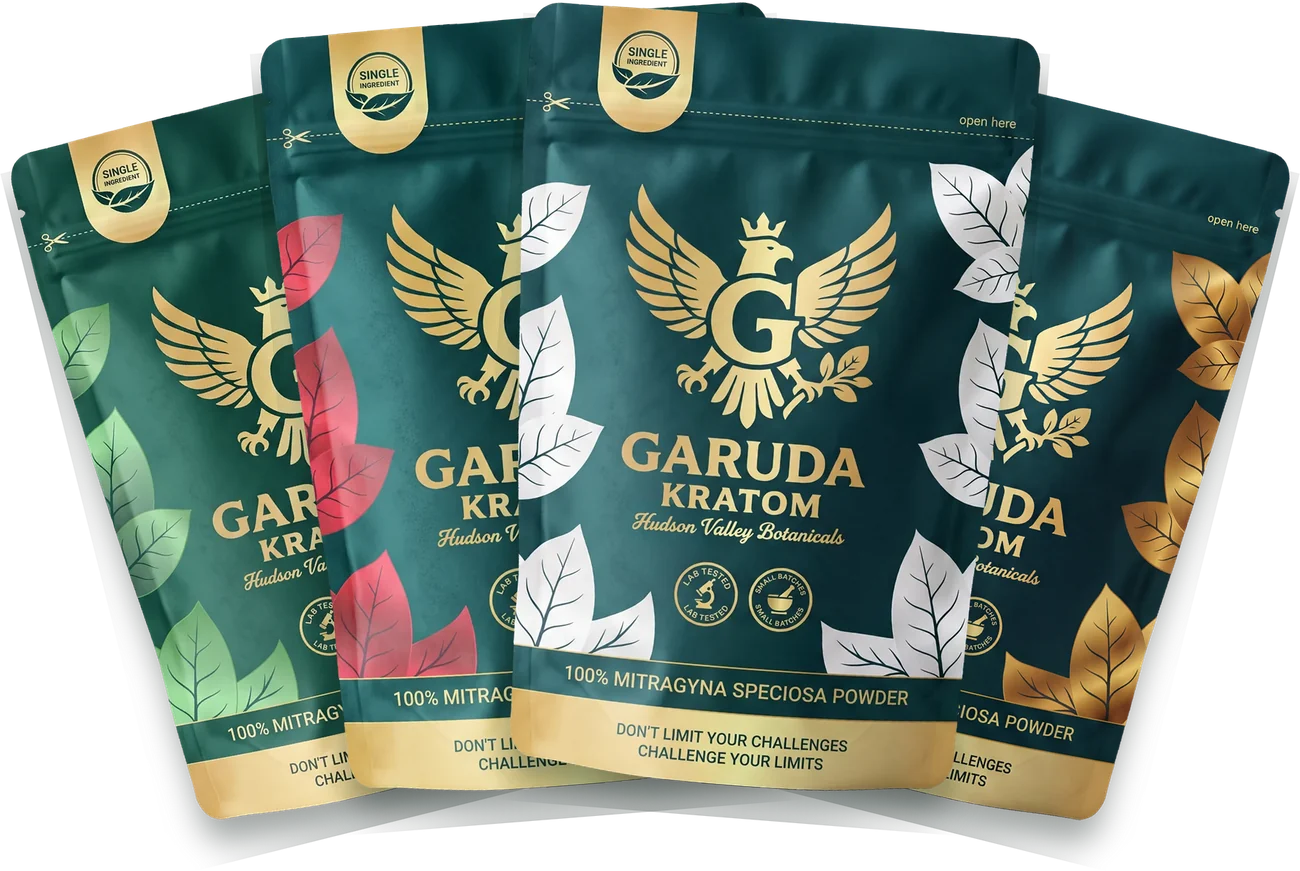
A certificate of analysis for every lot of Garuda Kratom we sell: alkaloids, heavy metals and microbials, from independent ISO 17025 laboratories. Enter the batch number from your pouch to see its numbers.
The batch number is printed on every pouch, and the pouch’s QR code opens its certificate directly.
Hudson Valley Botanicals
3 of 3 panels passed
Hudson Valley Botanicals
3 of 3 panels passed
Hudson Valley Botanicals
3 of 3 panels passed
Hudson Valley Botanicals
3 of 3 panels passed
Hudson Valley Botanicals
3 of 3 panels passed
Hudson Valley Botanicals
3 of 3 panels passed
Hudson Valley Botanicals
3 of 3 panels passed
Hudson Valley Botanicals
3 of 3 panels passed
Hudson Valley Botanicals
3 of 3 panels passed
Hudson Valley Botanicals
3 of 3 panels passed
Hudson Valley Botanicals
4 of 4 panels passed
Hudson Valley Botanicals
4 of 4 panels passed
Hudson Valley Botanicals
3 of 3 panels passed
Hudson Valley Botanicals
3 of 3 panels passed
Hudson Valley Botanicals
3 of 3 panels passed
Hudson Valley Botanicals
3 of 3 panels passed
What we test for
If a lot misses a release limit on any panel, it doesn't ship. Open a panel below to see what each test means and how our limits compare with published reference levels.
Mitragynine and 7-hydroxymitragynine on every lot, plus the minor alkaloids on our newest certificates.
Whole leaf only. We don't sell extracts or 7-OH products.
01 · Alkaloid content
Alkaloids are compounds the kratom plant (Mitragyna speciosa) makes on its own. Measuring them on every lot confirms that the leaf matches the strain on its label and that nothing has been added to it.
How it's measured. HPLC (high-performance liquid chromatography) separates each alkaloid in the sample and measures it on its own. 7-OH is present in such small amounts that our newer certificates measure it by LC-MS/MS, which reads down to parts per million.
| Alkaloid | Typical range in leaf | Method | Our requirement |
|---|---|---|---|
| Mitragynine | 0.5% to 2.0% | HPLC | Reported on every lot |
| 7-OH | 0.001% to 0.05% | HPLC, LC-MS/MS | Under 2% of total alkaloids |
The 2% cap on 7-OH is the limit written into state Kratom Consumer Protection Acts.
Alkaloid content varies naturally with harvest time, growing region, strain and processing. Mature leaves from older trees tend to measure higher, and rainfall, soil and sun play a part too. That variation is expected, and it's one reason every lot gets its own certificate.
Lead, arsenic, cadmium and mercury, measured by ICP-MS against our release limits.
02 · Heavy metals
Trace metals can turn up in any plant, taken up from the soil and irrigation water where it grows. Some build up in the body with long-term exposure, which is why limits exist for foods and botanicals, and why every lot is tested before release.
How it's measured. ICP-MS (inductively coupled plasma mass spectrometry), the standard method for trace metals. It detects them down to parts per billion.
| Metal | Reference level | Our release limit | Highest result on file |
|---|---|---|---|
| Lead (Pb) | 10 (WHO, herbal medicines) | < 1.5 | 0.746 |
| Arsenic (As) | No WHO level set | < 1.0 | 0.592 |
| Cadmium (Cd) | 0.3 (WHO, herbal medicines) | < 0.41 | 0.021 |
| Mercury (Hg) | No WHO level set | < 0.20 | 0.038 |
All figures in µg/g, the same as mg/kg or parts per million. Our lead limit is more than six times tighter than the WHO level for herbal medicines.
< LOQ means below the limit of quantitation: too little to measure precisely, if it is there at all. < LOD and ND mean below the limit of detection: the method found none. Both are the best result a lab can report.
Plate count, yeast and mold, coliforms, E. coli and Salmonella, with limits set per AHPA and USP guidance for botanical powders.
03 · Microbial screening
Kratom is a raw botanical grown in tropical forests, so some microbes are always present. What matters is that harmful organisms are absent and that overall counts stay low.
How it's measured. The lab cultures a sample on growth media and counts the colonies that form, reported as colony-forming units per gram (CFU/g). E. coli and Salmonella are tested for presence in a 10 gram portion.
| Test | Raw herb | Finished product | Our release limit |
|---|---|---|---|
| Total plate count | < 10,000,000 | < 10,000 | < 10,000 |
| Yeast and mold | < 100,000 | < 10,000 | < 10,000 |
| Total coliforms | < 10,000 | < 100 | < 100 |
| E. coli | Absent | Absent | Absent |
| Salmonella | Absent | Absent | Absent |
CFU/g. Industry guidance sets looser counts for raw herb meant for further processing and tighter counts for finished products. We hold every lot to the finished-product tier, 10 to 1,000 times tighter than the raw-herb figures.
A few varieties, like Gold Bali, go through a controlled fermentation step that naturally raises microbial counts. When one is in rotation it is held to wider count limits (plate count and yeast and mold under 100,000 CFU/g, coliforms under 1,000 CFU/g). E. coli and Salmonella must still be absent, and every batch is still tested.
Capsules get a fourth panel. Each capsule lot is also screened for pesticides by GC-MS/MS. Acephate, deltamethrin and malathion: none detected.
Lots C-RBI7225 and C-SG7225Share of the sample's weight. 1.52% mitragynine means 1.52 g in every 100 g of leaf.
The same unit: parts per million. 35.6 ppm of 7-OH is 0.00356% of the sample.
Below the limit of quantitation: too little to measure precisely, if it's there at all.
Below the limit of detection. The lab's method found none.
Colony-forming units per gram, a count of live microbes in the sample.
The lab tested a 10 gram portion and didn't find the organism.
The archive
Search by strain or batch number. Open any lot for the full certificate and the original lab PDFs, or switch to the comparison table.
Showing all 16 lots
Kratom powder
Current lotNo. RMD4626 · Tested Aug 24, 2026
Kratom powder
Current lotNo. SMD4626 · Tested Aug 24, 2026
Kratom powder
Current lotNo. GJK4626 · Tested Apr 13, 2026
Kratom powder
Current lotNo. RBI4626 · Tested Apr 13, 2026
Kratom powder
Current lotNo. SG4626 · Tested Apr 13, 2026
Kratom powder
Current lotNo. WMD4626 · Tested Apr 13, 2026
Kratom powder
Current lotNo. GH11425 · Tested Nov 14, 2025
Kratom powder
Current lotNo. GMD11425 · Tested Nov 14, 2025
Kratom powder
Earlier lotNo. SMD11425 · Tested Nov 14, 2025
Kratom powder
Current lotNo. WG11425 · Tested Nov 14, 2025
Kratom capsules
Current lotNo. C-RBI7225 · Tested May 22, 2025
Kratom capsules
Current lotNo. C-SG7225 · Tested Apr 24, 2025
Kratom powder
Earlier lotNo. RBI22625 · Tested Feb 26, 2025
Kratom powder
Earlier lotNo. SG22625 · Tested Feb 26, 2025
Kratom powder
Earlier lotNo. WMD22625 · Tested Feb 26, 2025
Kratom powder
Earlier lotNo. RMD1424 · Tested Jan 4, 2024
| Certificate | |||||||||||
|---|---|---|---|---|---|---|---|---|---|---|---|
| Red Maeng DaRMD4626Current | Aug 24, 2026 | Powder | 1.00 | 22.6 | 1.55 | 0.686 | 0.251 | < LOQ | 0.019 | 2800 | |
| Super Maeng DaSMD4626Current | Aug 24, 2026 | Powder | 1.45 | 15 | 2.20 | 0.693 | 0.449 | < LOQ | 0.029 | 500 | |
| Green JongkongGJK4626Current | Apr 13, 2026 | Powder | 1.50 | 36.4 | 2.25 | 0.666 | 0.592 | < LOQ | 0.038 | 400 | |
| Red BaliRBI4626Current | Apr 13, 2026 | Powder | 1.08 | 75.7 | 1.67 | 0.497 | < LOD | < LOQ | 0.017 | 800 | |
| Super GreenSG4626Current | Apr 13, 2026 | Powder | 1.52 | 35.6 | 2.28 | 0.391 | 0.077 | < LOD | 0.020 | 200 | |
| White Maeng DaWMD4626Current | Apr 13, 2026 | Powder | 1.49 | 43.1 | 2.24 | 0.745 | 0.486 | < LOD | 0.036 | < 100 | |
| Green HuluGH11425Current | Nov 14, 2025 | Powder | 1.218 | 10 | Not tested | 0.500 | 0.105 | < LOD | < LOQ | 100 | |
| Green Maeng DaGMD11425Current | Nov 14, 2025 | Powder | 1.248 | 10 | Not tested | 0.447 | 0.265 | < LOQ | < LOQ | < 100 | |
| Super Maeng DaSMD11425 | Nov 14, 2025 | Powder | 1.238 | 10 | Not tested | 0.519 | 0.197 | < LOQ | < LOQ | < 100 | |
| Wild GreenWG11425Current | Nov 14, 2025 | Powder | 1.223 | 10 | Not tested | 0.386 | 0.146 | < LOD | < LOQ | 300 | |
| Red Bali CapsulesC-RBI7225Current | May 22, 2025 | Capsules | 1.26 | 49.5 | 2.05 | 0.628 | 0.527 | 0.021 | < LOQ | 4,287 | |
| Super Green CapsulesC-SG7225Current | Apr 24, 2025 | Capsules | 1.47 | 53 | 2.36 | 0.440 | 0.329 | 0.014 | 0.015 | 380 | |
| Red BaliRBI22625 | Feb 26, 2025 | Powder | 0.7014 | 25 | Not tested | 0.674 | 0.285 | < LOQ | 0.032 | 4,100 | |
| Super GreenSG22625 | Feb 26, 2025 | Powder | 1.3331 | 71 | Not tested | 0.654 | 0.186 | < LOQ | 0.036 | 600 | |
| White Maeng DaWMD22625 | Feb 26, 2025 | Powder | 1.28 | 30 | Not tested | 0.746 | 0.332 | < LOQ | 0.024 | 2,500 | |
| Red Maeng DaRMD1424 | Jan 4, 2024 | Powder | 1.16 | 180 | Not tested | 0.256 | 0.052 | < 0.072 | < 0.017 | 300 |
Heavy metals in µg/g (ppm). Values below a lab's detection or quantitation limit are shown as reported and sort as zero. Older lots were tested for mitragynine and 7-OH only, so their total alkaloids aren't reported.
Try a strain name like Super Green, or the batch number printed on your pouch.
Exposure calculator
Pick one of our lots, or type the four heavy-metal values from any vendor's certificate. The calculator multiplies each value by the grams you enter and compares the result with three published reference levels.
USP <2232> sets permitted daily exposure limits for elemental contaminants in dietary supplements, built from toxicology data with a margin built in. We don't market kratom as a dietary supplement; the chapter is used here as a reference point only.
WHO / JECFA publishes tolerable intakes (PTWI, PTMI, BMDL) that national regulators reference. The figures here are scaled to a 60 kg adult per day. WHO withdrew its lead value in 2010 and hasn't set a new one.
California Prop 65 uses much lower levels for cancer and reproductive risk modeling, so a result can sit under USP and over Prop 65. Many foods and botanicals carry a Prop 65 warning for that reason.
Typical contributions per serving in µg, drawn from the FDA Total Diet Study, FDA imported-spice surveillance and independent supplement testing. Values vary widely by source and region; these are approximate midpoints, reproduced for dietary context only.
This calculator compares elemental contaminant figures with published reference levels. It is not a safety determination or medical advice, and it says nothing about kratom use itself. Kratom is not approved by the FDA for any use.
Why we publish
Every number on this page comes straight from an independent lab report. Nothing is summarized away, and the original PDFs are one click from every certificate.
Every lot goes to an ISO 17025 accredited laboratory. Trained analysts and validated methods, not in-house test kits.
No quiet relabeling and no exceptions. A lot that misses a release limit never reaches the shelf.
The batch number and QR code on every pouch lead back to its certificate here, including the 250g pouches inside a split kilo.
A full strain lineup and split-kilo pricing. The numbers on this page are the numbers behind every pouch we ship.
SALE OF KRATOM TO PERSONS UNDER TWENTY-ONE YEARS OF AGE IS PROHIBITED BY LAW